
My First Pastry Cream Panic
The first time I made pastry cream, I thought I ruined it. I was just a teenager, helping my grandma in her tiny kitchen. I poured hot milk into my eggs way too fast. The whole thing turned into a lumpy, scrambled mess. I still laugh at that memory now, because it taught me the most important rule: go slow.
Pastry cream is like a magic trick. It starts as liquid and becomes a silky, creamy custard right in your pot. It fills cream puffs, doughnuts, and cakes with the most wonderful flavor. Have you ever tried something homemade and thought, “Why have I been buying this?” That’s the feeling I want to share with you.
Why This Simple Cream Matters
When you make pastry cream from scratch, you are in control. You know exactly what goes in. No weird chemicals or fake flavors, just milk, eggs, sugar, and a little butter. That is a good feeling. It means you can trust the food you give to the people you love.
This recipe is also a secret key. Once you master it, you unlock dozens of other desserts. You can make banana pudding, fruit tarts, or even a simple bowl of berries with cream. Why does that matter? Because learning one thing well helps you do many things better. Does that make sense?
The Tempering Dance
Here is where most folks get nervous: tempering the eggs. Don’t be scared. It is just a little dance between hot and cold. You take a tiny splash of the hot milk mixture and stir it fast into your egg yolks. Then you add another splash, and another. You are warming the eggs up slowly so they don’t scramble.
Think of it like stepping into a warm bath. You don’t jump in if the water is boiling, right? You put your toe in first. Same idea here. I promise, if you whisk quickly and add the milk a bit at a time, you will feel like a real pastry chef.
*Fun fact: If your eggs are room temperature, they blend with the hot milk much more easily. Cold eggs can cause lumps. So take them out of the fridge 30 minutes before you start.*
Whisking, Patience, and a Little Butter
Once you add the egg mixture back into the pot, you cannot stop whisking. Not for one second. It sounds like a lot of work, but it only takes about two minutes. The cream will go from thin to thick right before your eyes. It is like watching a liquid turn into pudding. Doesn’t that smell amazing?
After you take it off the heat, you stir in the butter. This step is pure joy. The butter melts and makes everything shiny and smooth. If you see little lumps, don’t panic. Just press the cream through a fine-mesh strainer. That catches the lumps and leaves you with velvet. Have you ever used a strainer to fix a recipe before?
Don’t Skip the Skin
When you put your cream in the fridge to cool, it wants to grow a skin. That rubbery layer on top is not tasty. So you do a very important trick. You press a piece of plastic wrap right down onto the surface of the cream. The wrap touches the cream, so no skin can form.
Let it chill for a few hours. When you come back, give it a good whisk to make it fluffy again. Then you can pipe it into a tart shell or spoon it over a brownie. This is the moment when all your stirring becomes worth it. What is the first thing you would fill with this cream?
Ingredients:
| Ingredient | Amount | Notes |
|---|---|---|
| sugar | 1/2 cup | |
| cornstarch | 1/4 cup | |
| whole milk | 2 cups | |
| large egg yolks, room temperature | 4 | |
| unsalted butter | 2 tablespoons |
My Grandma’s Little Pot of Gold
I still remember the first time I made pastry cream. I was twelve, standing on a stool in my grandma’s kitchen. She called it “magic pudding.” I burned the milk and cried a little. Now, I laugh at that memory. Doesn’t this smell amazing already? All you need is sugar, cornstarch, milk, egg yolks, and butter. Simple things make the best treats.
Step 1: First, whisk the sugar, cornstarch, and milk together in a heavy pot. Put it over medium heat and stir, stir, stir. Keep going until it gets thick and starts to bubble. Then turn the heat to low and whisk for two more minutes. Take it off the stove. Your arm might get tired, but that is a good sign. (Hard-learned tip: If you stop stirring even for one second, the bottom will scorch. Trust me, I learned this the messy way.)
Step 2: Now we temper the eggs. That is a fancy word for warming them up slowly. Grab a few spoonfuls of your hot milk mix and dribble it into the egg yolks. Whisk fast! If you go too slow, you will get scrambled eggs in your cream. I once made that mistake on a Sunday morning. My grandma just smiled and said, “Now you know.” Don’t let that scare you. Work quick and you will be fine.
Step 3: Pour the egg mixture back into the saucepan. Whisk, whisk, whisk some more. Bring it to a gentle boil. Keep whisking for two full minutes. Your arm will feel like it’s dancing. That is the secret to a smooth, thick cream. I like to hum a silly song while I do it. Does anyone else do that? What song do you hum in the kitchen? Share below!
Step 4: Take the pot off the heat and pour the cream into a clean bowl. Drop in the butter and stir until it melts and looks shiny. Now is the time to add a teaspoon of vanilla extract if you want. Stir it all together. If you see little lumps, don’t panic. Just press the cream through a mesh sieve with a spoon. That fixes everything.
Step 5: Pastry cream hates having a skin on top. Press plastic wrap right onto the warm cream. Push out all the air bubbles. Then pop it in the fridge until it is cold. When you are ready to use it, give it a good whisk to fluff it up. Then you can spread it on cakes, fill donuts, or just eat it with a spoon. I won’t judge.
Cook Time: 10 minutes
Total Time: 2 hours 10 minutes (includes chilling)
Yield: About 2 cups
Category: Dessert, Filling
Three Fun Ways to Switch It Up
Sometimes I get bored making the same thing twice. That is when I play with flavors. These three twists are my little secrets. Which one would you try first? Comment below!
Chocolate Dream Twist: Melt 4 ounces of dark chocolate into the warm cream right after you add the butter. Stir until it is brown and silky. Tastes like a hug in a bowl.
Lemon Sunshine Twist: Swap the vanilla for the zest of one lemon and one tablespoon of lemon juice. It makes the cream bright and tangy. Perfect for summer pies.
Spiced Apple Twist: Add a pinch of cinnamon, nutmeg, and a splash of apple cider to the milk before cooking. It smells like autumn leaves and cozy mornings.
How to Serve and Sip
I love piling this cream into little tart shells with fresh berries on top. A sprinkle of powdered sugar makes it look fancy. You can also layer it with graham crackers and bananas for a quick pudding dessert. Or just dollop it onto warm pancakes. Yum.
For a grown-up drink, try a small glass of cold milk with a splash of vanilla extract. Kids love it too. If you want something warm, brew a cup of chamomile tea. It matches the creamy sweetness perfectly. Which would you choose tonight?
Storing Your Pastry Cream the Right Way
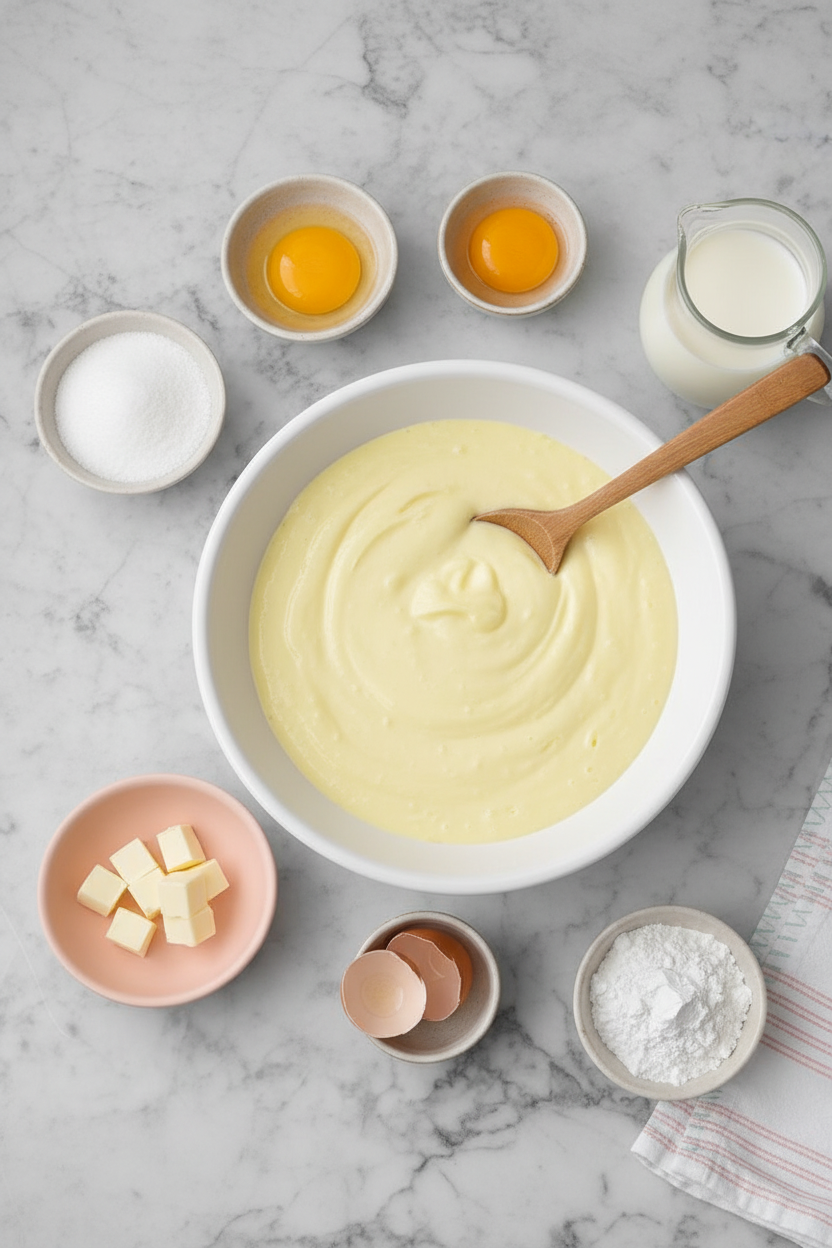
Your pastry cream can sit in the fridge for three to four days. Always press plastic wrap right onto the surface. This stops that thick, rubbery skin from forming. I remember my first batch of pastry cream. I forgot the wrap and found a sad, wrinkled skin on top the next morning. My grandma laughed and showed me her trick. It has worked ever since.
Freezing is not the best idea for this cream. It gets watery and grainy when thawed. If you must freeze it, use it in a baked dessert like a tart later. Batch cooking is wonderful for busy weeks. You can make the cream on Sunday and enjoy pies or cream puffs all week. Have you ever tried storing it this way? Share below!
Why storing matters: It saves you time and keeps your dessert safe to eat. A well-stored cream stays silky and fresh for every treat you make.
Fixing Common Pastry Cream Problems
First problem: lumps in your cream. This happens when you stop whisking for even a few seconds. The fix is easy. Press the hot cream through a fine mesh sieve right into a clean bowl. I once had a lumpy batch that looked like cottage cheese. The sieve saved it in two minutes.
Second problem: your eggs scrambled into bits. You added the hot milk too fast to the yolks. The fix is to go slower next time. Add just one spoonful of hot milk and whisk fast. Then add another. This is called tempering. It works every time you are patient.
Third problem: the cream is too thin and runny. You did not cook it long enough after adding the eggs. You must bring it to a gentle boil and whisk for two full minutes. The cornstarch needs that heat to thicken properly. Which of these problems have you run into before?
Why fixing these matters: You learn to trust your senses. Each fix makes you a more confident cook. Your desserts will taste better too.
Your Top 5 Pastry Cream Questions Answered
Q: Can I make this gluten-free? A: Yes. Cornstarch is naturally gluten-free. This recipe is safe for celiac friends.
Q: Can I make it ahead of time? A: Yes. Make it up to three days before you need it. Keep it chilled with wrap on top.
Q: Can I swap the whole milk? A: Yes. Use 2% milk or oat milk. The cream will be slightly less rich but still good.
Q: Can I double this recipe? A: Yes. Double everything. Use a larger saucepan so you have room to whisk.
Q: Can I add other flavors? A: Yes. Stir in almond extract, lemon zest, or melted chocolate with the butter. Which tip will you try first?
*Fun fact: Pastry cream was first written down in a French cookbook over 300 years ago. People still love it today.*
From My Kitchen to Yours
Thank you for spending time with me today. Making pastry cream from scratch is a small act of love. Your family will taste the difference. I hope you fill your kitchen with whisking sounds and sweet smells. Have you tried this recipe? Tag us on Pinterest so I can see your beautiful tarts and cream puffs. You can find me under ChloeHartwellBakes. Happy cooking!
—Chloe Hartwell.
Homemade Pastry Cream Recipe From Scratch
Description
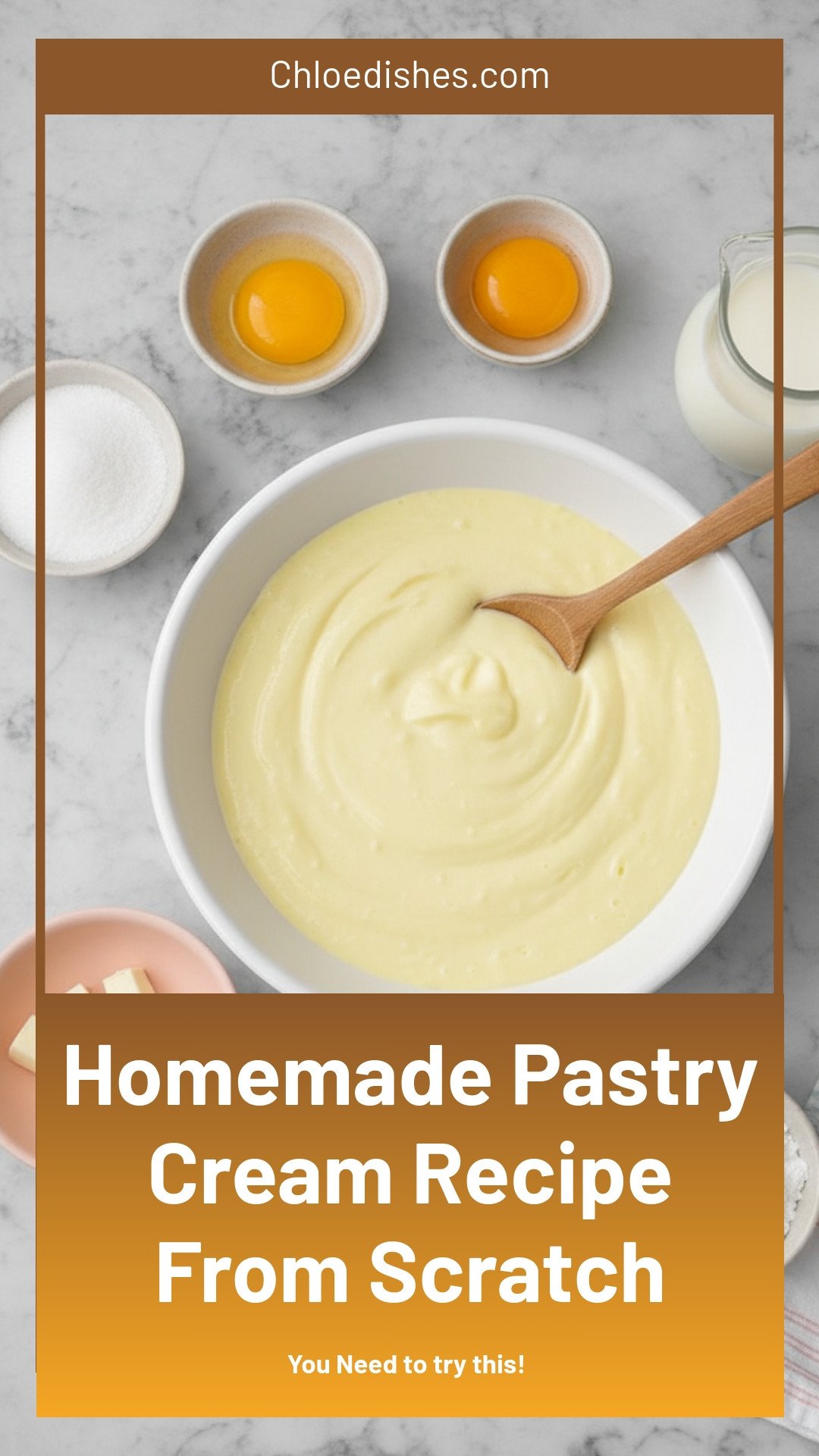
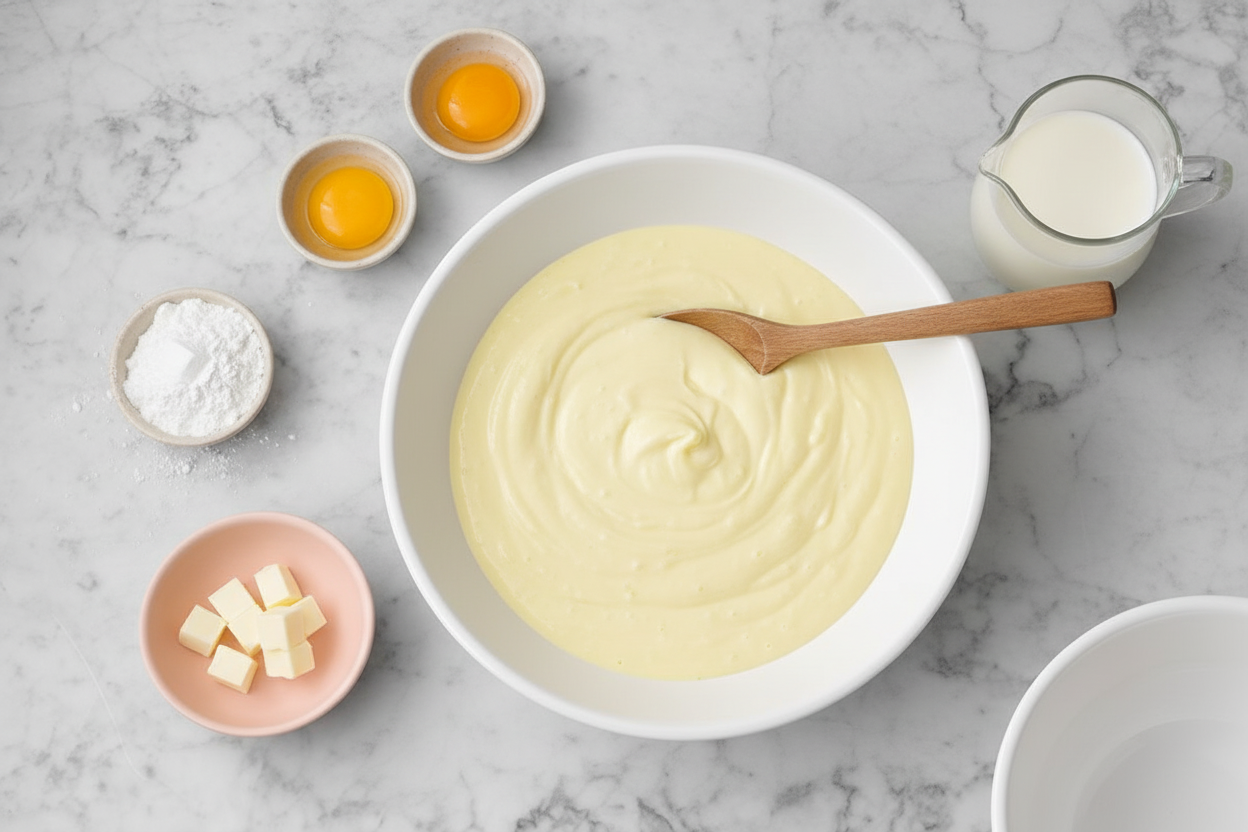
Learn how to make silky, rich homemade pastry cream from scratch with simple ingredients. Perfect for tarts, éclairs, and cakes.
Ingredients
Instructions
- Start by whisking together the sugar, cornstarch and milk together in a heavy saucepan. Cook over medium heat until thickened and bubbly, stirring all the while. Once thickened, reduce the heat to low and keep whisking for another two minutes. Then take the pan off the heat.
- Now comes the most challenging part of making pastry cream: tempering the eggs. This just means adding a small amount of a hot mixture to eggs so they don’t scramble. This isn’t a challenging technique, but you do have to work fast. To do this, take a few spoonfuls of your hot milk mixture and add it to your room temperature egg yolks and whisk quickly.
- Next, add the egg yolk mix to the saucepan and whisk, whisk, whisk. Bring the mix to a gentle boil and continue to whisk for another two minutes.
- After your mix is thickened, transfer it to a clean bowl. Then stir in the butter until the pastry cream is nice and smooth. If you want to add extracts to your pastry cream for flavor, this is the time. Stir in a teaspoon of vanilla extract or paste along with the butter. Editor’s Tip: If you find your cream looks a little lumpy coming off the stove, don’t worry! Press it through a mesh sieve first, then stir in the butter.
- Before you can use your pastry cream in your decadent desserts, it needs to cool. Much like pudding, pastry cream can form an unpleasant skin if stashed uncovered. For best results, press plastic wrap right onto the cream and chill. Once cold and you’re ready to finish creating your dessert, give the pastry cream a good whisk to lighten up the texture. Then spread, pipe and sample to your heart’s content.



Leave a Reply