
My Focaccia Flower Garden
I tried painting with food this week. I made a botanical focaccia. That’s just a fancy way of saying I decorated bread with herbs and veggies. I wanted to make a bread garden. It felt like playing with my food, in the best way.
I used rosemary for little trees. Thin slices of onion became pretty flowers. I pressed them right into the soft dough. Doesn’t that smell amazing? The olive oil made everything shine. This matters because cooking should be fun, not scary. It’s okay to play with your ingredients.
The Happy, Messy Dough
Let me tell you about the dough. It starts as a shaggy, sticky mess. You knead it with your hands for just three minutes. Then you must walk away. Let it rest for 15 minutes. This rest is so important.
I remember my first time. I didn’t let the dough rest. I kept poking it. My bread was tough! Now I know better. That short rest lets the flour relax. It makes the next kneading easy. Fun fact: The “00” flour is super fine. It makes the bread’s inside very soft and tender.
A Lesson in Patience
Here is the hard part. You let the dough balls rise for hours. Three to four whole hours! I set them on the counter. I covered them with a damp cloth. Then I had to wait. I wanted to peek under the cloth so often.
But waiting is the secret. The yeast is alive. It’s eating and growing, making the dough puff up. This matters because good food often asks for our patience. The wait makes the flavor better. What’s the hardest part of baking for you? Is it the waiting, too?
Poking and Pressing
Time to decorate! You coat your pan with oil. Then you spread the dough. Now, you must dock it. That means poking it all over with your fingers. I still laugh at that. It feels wonderfully silly.
You make little dimples all over. This stops big bubbles from forming. Then you press your toppings in. Really press them. If you don’t, they will fall off after baking. What would you use to decorate your bread garden? Tell me your dream toppings!
The Golden Reward
Into the hot oven it goes. The smell fills the whole house. It smells like herbs and warm bread. After 30 minutes, it turns a perfect golden brown. You must let it cool on a rack. This keeps the bottom crisp.
Then, you can finally break a piece off. The crust crackles. The inside is soft. The onions taste sweet. The rosemary is fragrant. It is a masterpiece you can eat. Would you make a savory bread garden or a sweet one? I’d love to see a picture if you try it.
Ingredients:
| Ingredient | Amount | Notes |
|---|---|---|
| 00 flour | 1 cup plus 1 Tbsp. | |
| All-purpose flour | 1 cup plus 1 Tbsp. and 2 tsp. | |
| Fine sea salt | 1 tsp. | For the dough |
| Active dry yeast | 3/4 tsp. | |
| Extra-virgin olive oil | 1 tsp. | For the dough |
| Toppings of your choice | As needed | For botanical design |
| Olive oil | For coating pan and drizzling | |
| Salt and pepper | For seasoning | To taste |
My Garden on a Pan: Botanical Focaccia
Hello, my dear! Come sit. Let’s make a bread garden. This is my botanical focaccia. It’s edible art. You can make little flowers and herbs on top. I love how it makes the kitchen smell. It feels like a sunny afternoon.
It’s simpler than it looks, I promise. The dough is soft and friendly. You just need patience for the rising. That’s when the magic happens. I listen to the radio while I wait. Doesn’t that smell amazing already? Let’s begin.
Step 1: First, we wake up the yeast. Mix it with warm water and a glug of olive oil. It should look a little foamy. Combine your flours and salt in a big bowl. Pour the yeast water right in. Now, get your hands messy! Knead it all together for three minutes. It will be shaggy. Let it rest for 15 minutes. (A hard-learned tip: Your water can’t be too hot, or it will hurt the yeast. Think warm bath water.)
Step 2: After its nap, knead the dough again. It will feel smoother now. Divide it into two balls. Tuck them on a floured spot. Cover them with a damp cloth. Let them rise for hours. They will get nice and puffy. I use this time to plan my garden design. What would you plant on your bread: rosemary trees or tomato suns? Share below!
Step 3: Coat your pan with plenty of olive oil. Press each dough ball into the pan. Now, poke it all over with your fingers. This is called docking. It makes lovely little holes. Decorate with your toppings. Press them in gently so they stay. Drizzle more oil and sprinkle salt. I still laugh at the time I made a bread sunflower.
Step 4: Bake it until it’s golden and singing. Your whole house will smell like an Italian bakery. Let it cool on a rack. This is the hardest part! Waiting makes the crust perfect. Then, slice it up. Ooh and aah at your creation. Finally, devour every last crumb.
Cook Time: 30 minutes
Total Time: 4-5 hours (mostly resting)
Yield: 2 small loaves
Category: Baking, Bread
Three Ways to Paint Your Bread
Your focaccia is a blank canvas. Change it with the seasons! Here are my favorite twists. They are all so simple and pretty.
The “Everything Garden” Use red onion petals, black olives, and fresh rosemary. It’s classic and so flavorful.
Sunshine Lemon & Herb Press thin lemon slices and thyme into the dough. It tastes bright and cheerful.
Rainbow Veggie Patch Make little flowers from bell peppers and zucchini. Add cherry tomato centers. It’s pure joy.
Which one would you try first? Comment below!
Serving Your Masterpiece
This bread is a star. Tear it warm from the pan with friends. For a meal, serve it with a big bowl of tomato soup. Or top a slice with ricotta cheese and honey. That’s my favorite afternoon treat.
For drinks, a crisp white wine pairs beautifully. For a cozy night, try sparkling lemonade with a sprig of mint. Both are delightful. Which would you choose tonight?

Keeping Your Focaccia Fresh
Let’s talk about keeping your bread lovely. Cool your focaccia completely first. Wrap it tight in foil for the fridge. It will stay good for two days.
For the freezer, slice it first. Wrap slices in plastic, then foil. They can freeze for a month. Thaw at room temperature when you’re ready.
Reheating is simple. Warm slices in a toaster oven. A quick bake at 350°F works too. This brings back the crispy crust.
I once froze a whole loaf. It was soggy when thawed. Slicing first changed everything for me. Batch cooking means future-you gets a treat!
Have you ever tried storing it this way? Share below! Good storage saves food and your hard work. It makes a busy day easier.
Focaccia Fixes for Happy Bakers
Is your dough not rising? Check your yeast date. Use lukewarm water, not hot. Hot water can hurt the yeast.
Are your toppings burning? Press them into the dough well. This helps them stick. It also protects them from the heat.
Is the bread too dense? You might need more water. The dough should be soft and sticky. I remember my first dense loaf well!
Fixing small problems builds your confidence. You learn how ingredients work together. It also makes your food taste much better.
Which of these problems have you run into before? Every baker faces them. That’s how we learn and improve.
Your Focaccia Questions, Answered
Q: Can I make this gluten-free? A: Try a 1-to-1 gluten-free flour blend. The texture will be a bit different but still tasty.
Q: Can I make the dough ahead? A: Yes! Let it rise in the fridge overnight. This actually develops more flavor.
Q: What are good topping swaps? A: Use fresh herbs, onions, or olives. Get creative with what you have in your kitchen.
Q: Can I double the recipe? A: Absolutely. Just use two pans. Do not crowd the dough into one pan.
Q: Any optional tips? A: Add a sprinkle of rosemary. Fun fact: rosemary grows like a weed in my garden!
Which tip will you try first? I love the overnight rise. It makes morning baking so easy.
Share Your Kitchen Creations
I hope you try this botanical focaccia. It is such a joyful project. I would love to see what you create.
Please share photos of your decorated bread. Tag my blog on Pinterest at @ChloesKitchen. It makes my day to see them.
Have you tried this recipe? Tag us on Pinterest! Thank you for baking with me today. Remember, the best ingredient is always love.
Happy cooking!
—Chloe Hartwell.

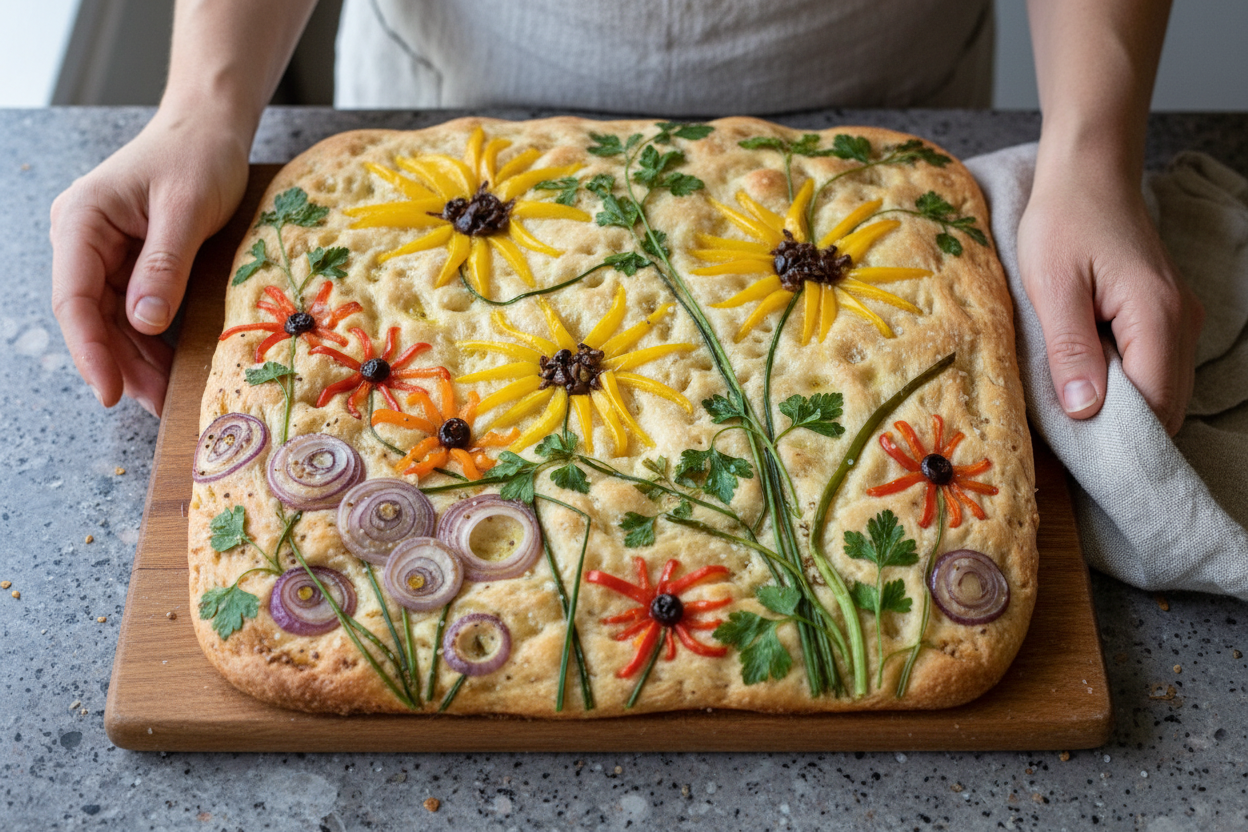
Home Baker Attempts Botanical Focaccia With Results
Description
A home baker’s stunning botanical focaccia art! See the beautiful, edible garden bread results and get inspired to create your own delicious masterpiece.
Ingredients
Instructions
- In a mixing bowl, combine flours and salt. In a small mixing bowl, stir together a little less than 1 cup lukewarm tap water, yeast and olive oil; pour it into flour mixture. Knead with your hands until combined, approximately 3 minutes, then let the mixture rest for 15 minutes. Knead rested dough for 3 minutes. Cut into 2 equal pieces and shape each into a ball. Place on floured surface, cover with dampened cloth, and let rest and rise for 3 to 4 hours at room temperature.
- Coat a pan with olive oil and spread dough evenly. Dock (or poke) the dough well with your fingertips. Decorate however you want, making sure that you press the ingredients into the dough to slightly adhere them. Drizzle with olive oil and season with salt and pepper.
- Bake at 400°F for 30 minutes or until golden brown. Let it cool on a wire rack; then ooh, aah and devour.



Leave a Reply