
The Day I Learned to Stop Crying Over Spilled Syrup
You know that feeling when you drop the last cookie on the floor? I had that moment with my first batch of gulab jamun. I was twenty-three and thought I knew everything about cooking. I did not. The little dough balls puffed up like angry balloons. Then they burst open. Syrup went everywhere. My kitchen looked like a sticky crime scene. I still laugh at that memory every time I make these now. This recipe is different. It uses sweet rolls from the store. That is the secret. No fancy kneading or waiting for dough to rise. Just soft, happy dumplings that soak up sweetness like little sponges. Have you ever had a cooking disaster that turned into a good memory later? I bet you have. Tell me about it in your head while you read.Why Sweet Rolls? (And Other Kitchen Secrets)
My grandmother used to make gulab jamun from scratch. She would soak dried milk powder and shape each ball with love. It took all afternoon. I do not have that kind of time. These Hawaiian rolls are already soft and slightly sweet. They save you an hour of work. Just blitz them in the food processor until they look like sand. That is it. The baking powder makes them puff up like clouds. The milk holds everything together. Do not over-knead the dough. That is the biggest rule. Over-kneading makes them tough like old bread. Why does texture matter so much? Because a soft gulab jamun melts in your mouth. A tough one feels like a rubber ball. You want the melt, not the bounce. Here is a question for you: Do you like squishy foods or crunchy foods better? I am team squishy all the way.The Oil Temperature Dance
Frying is like a dance with heat. Too cold, and your dough balls drink oil like a thirsty horse. Too hot, and they burn on the outside while staying raw inside. I always fry one test ball first. Just one. If it turns brown in three to four minutes without puffing up into a monster, you are good. If it sinks and stays pale, wait a little longer. The *fun fact* is that gulab jamun means “rose berry” in Hindi. The syrup used to be made with rose water. That is where the name comes from. Gently swirl the balls around while they fry. Use a big spatula. This helps them cook evenly and stay round. Nobody wants a lopsided dessert. Doesn’t that smell amazing? The sweet cardamom and hot oil fill the whole house. My neighbors always know when I am making these.The Syrup Is the Hug
Think of the syrup as a warm hug for your fried dough balls. It has water, sugar, and cardamom pods. That is all. Simple things are often the best. You want the syrup to be thin, not thick like honey. If it gets too thick, the gulab jamun cannot soak it up. They need time to drink it in. This is why we keep the syrup covered while the oil heats. It stays warm and ready. When the fried balls go in, they start drinking immediately. That is where the magic happens. Why does this matter? Because the syrup is not just sweetness. It is the thing that turns a fried dough ball into a soft, juicy treat. Without the soak, it is just a donut hole. Would you add a splash of rosewater to your syrup? Some people love it. Others say it smells like perfume. I use just a tiny drop.Waiting Is the Hardest Part
You have to wait fifteen minutes after the balls go into the syrup. Fifteen whole minutes. That feels like forever when you are hungry. I set a timer and walk away. If I stand there looking at them, I will eat them too early. And they will break apart in my hands. They need time to become soft. Turn them halfway through so both sides get soaked. Be gentle. They are fragile like little pillows. One rough move and they fall apart. This waiting teaches patience. Good things take time. My grandmother used to say that rushing ruins rice and destroys desserts. She was right. What is something worth waiting for in your kitchen? Maybe cookies fresh from the oven? Or bread that needs to cool? I think waiting makes everything taste better.Eating Them Warm (My Favorite Part)
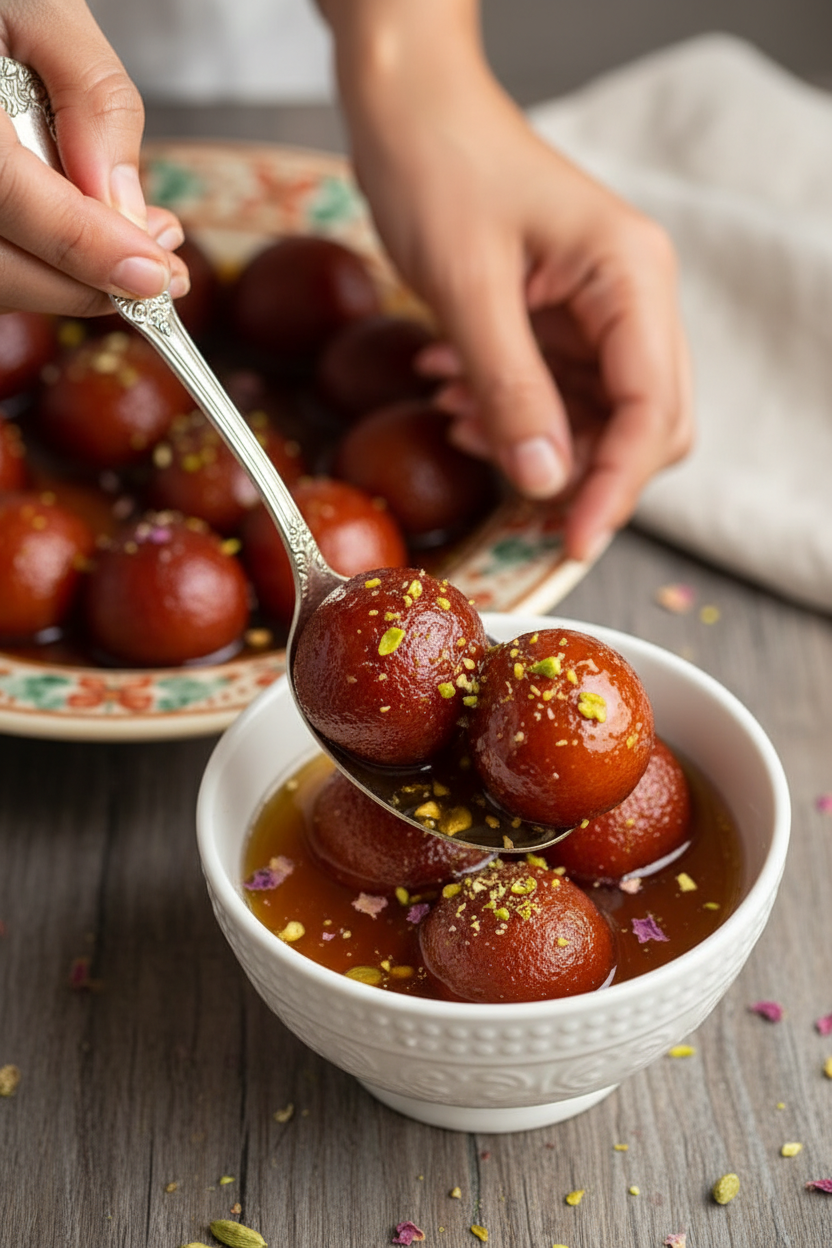
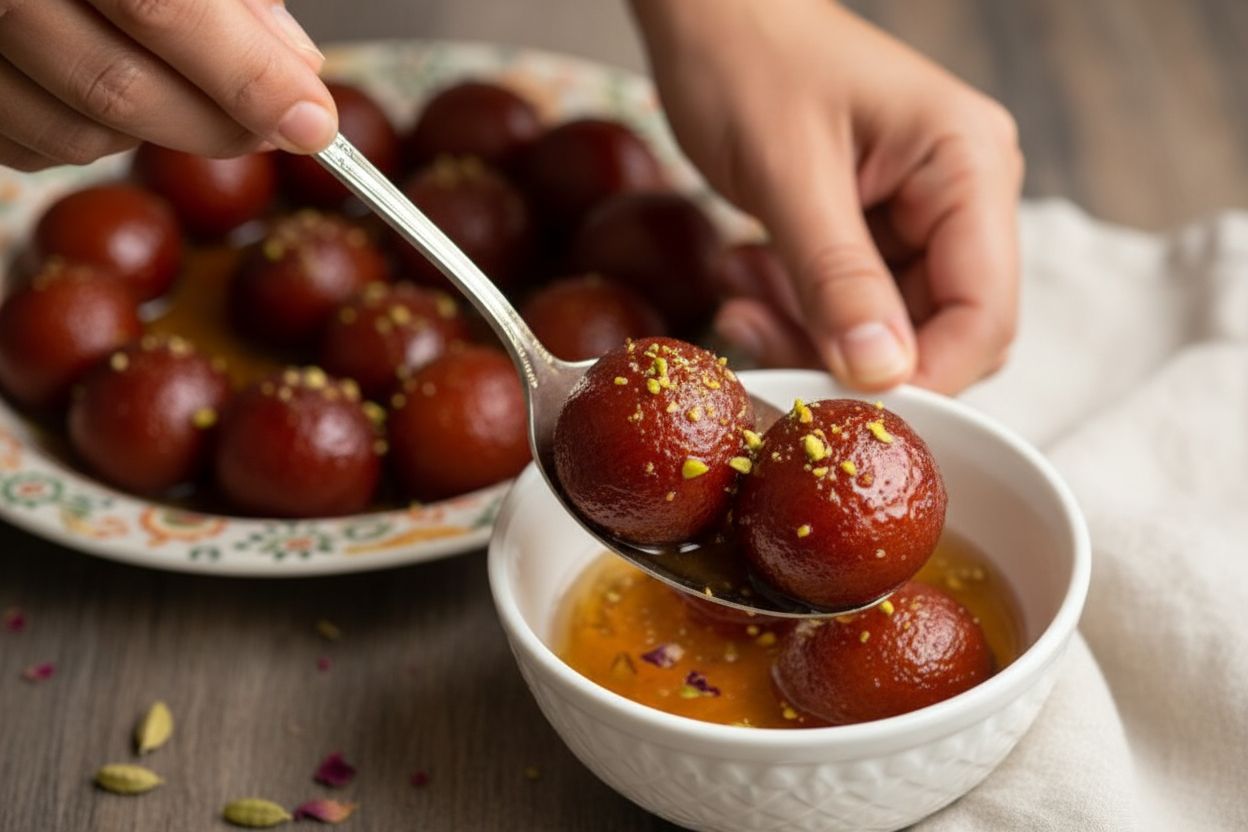
The first bite is the best. The gulab jamun is warm and syrupy. It squishes slightly between your teeth. Then the sweetness spreads across your tongue. I like to eat them with a small spoon. Some people pick them up with their fingers. That works too, but the syrup runs down your arm. Fair warning. These are perfect for a rainy afternoon or a happy celebration. They feel like a party in a bowl. One batch makes about twelve to fourteen balls. Enough for sharing, if you feel generous. Why does this matter? Because food made with your own hands tastes different. It tastes like effort and love. Store-bought versions are never this good. Here is a mini-poll for you: Would you eat these warm or cold? I am warm all the way. Cold ones are still good, but warm ones feel like a hug.One Last Thing Before You Go
I have made this recipe maybe fifty times now. Each batch is a little different. Sometimes the dough is too sticky. Sometimes the syrup boils over. That is okay. Cooking is not about being perfect. It is about trying. And tasting. And sharing with people you love. These gulab jamun always make people smile. If you try this recipe, let me know how it goes. Did your dough feel right? Did your syrup turn out good? I want to hear your story. And remember: the first batch might not be pretty. But it will still taste sweet. And that is what matters.Ingredients:
| Ingredient | Amount | Notes |
|---|---|---|
| Original Hawaiian Sweet Rolls | 8 rolls (240g) | Can substitute for 240g of any plain white bread |
| Baking powder | ⅓ tsp | |
| Whole milk | 5-6 tablespoon | |
| Water | 1 ⅓ cup | For syrup |
| Sugar | 1 cup | For syrup |
| Cardamom pods | 2-3 | For syrup |
| Rosewater | Optional | For syrup, if desired |
| Vegetable / canola oil | To deep fry |
The Sweetest Little Secret from My Kitchen
I remember the first time I made gulab jamun. It was a rainy Sunday, and my kitchen smelled like heaven. My grandmother used to make these little sweet balls for every celebration. She said they tasted like little golden clouds dipped in honey. I still laugh at how my first batch came out lumpy! But you know what? Practice makes perfect, and this recipe is here to help.
These gulab jamun use something surprising: soft Hawaiian sweet rolls. Doesn’t that sound fun? They make the dough so light and tender. You just blitz them into crumbs, add a pinch of baking powder, and a splash of milk. Knead gently, like you are patting a baby’s cheek. Then shape tiny, smooth balls. No cracks allowed, or else they might break while frying.
The syrup is just as simple. Water, sugar, and cardamom pods simmer together until the sugar melts. A drop of rosewater makes it extra special, if you have some. While that warms up, you heat oil in a deep pan. Here is my hard-learned tip: always test one ball first to check the oil temperature. If it sizzles and turns brown but doesn’t explode, you are golden!
Let’s Make Them Together, Step by Step
Grab your ingredients and let’s go. This is the part where the magic happens. Take it slow and enjoy the process.
Step 1: Blitz the Hawaiian sweet rolls in a food processor until they look like fine sand. Pour the crumbs into a big bowl. Add the baking powder and whisk it in. Then pour in 4 tablespoons of milk and stir with a spoon. The mixture will look dry at first, and that’s okay.
Step 2: Use your hands to gently knead the dough. Add a little more milk, a teaspoon at a time, until it just comes together. I usually need about 5 and a half tablespoons total. Knead for only 1 to 2 minutes to remove lumps. Don’t overwork it, or the gulab jamun will turn tough.
Step 3: Oil your hands lightly with a drop of vegetable oil. Divide the dough into 12 to 14 even pieces. Roll each piece into a smooth, round ball. Make sure there are no cracks on the surface. Cracks cause the balls to split open while frying. (My first batch taught me that lesson the hard way!)
Step 4: Place a wok on the stove and pour in enough oil to fill it about 2 inches deep. Turn the heat to medium-high. While the oil heats, make the syrup. Add water, sugar, and cardamom pods to a wide pan. Bring it to a boil, then simmer for 1 to 2 minutes until the sugar dissolves. Cover with a lid and turn off the heat.
Step 5: Test the oil temperature by dropping in one dough ball. The ball should turn a rich brown color in about 3 to 4 minutes. If it burns right away, the oil is too hot. If it stays pale, the oil is too cool. Adjust the heat until it’s just right. Once ready, carefully add half the balls to the oil.
Step 6: Use a large spatula to gently swirl the balls around in the oil. This helps them cook evenly on all sides. When they are a beautiful golden brown, lift them out and set them on a plate. Fry the second batch the same way. Now here is a little quiz for you: What happens if you skip the test ball? Share below!
Step 7: Drop all the fried balls into the warm syrup. Lift the pan and gently swirl it so the syrup coats every piece. Cover with a lid and let them sit for 15 to 20 minutes. Turn them halfway through so they soak evenly. After that, they will be soft, spongy, and ready to eat. Handle them gently because they break easily.
Cook Time: 20 minutes
Total Time: 45 minutes
Yield: 12 to 14 gulab jamun
Category: Dessert
Three Fun Twists to Try
Want to change things up? These are my favorite ways to make this recipe feel brand new. Each one adds a little surprise.
Coconut Gulab Jamun: Add 2 tablespoons of grated dried coconut to the dough. It gives a chewy texture and a sweet, nutty flavor that reminds me of summer picnics.
Saffron-Honey Syrup: Swap the sugar for honey, and add a pinch of saffron threads to the syrup. The golden color and floral taste feel so fancy, but it is still easy to make.
Spiced Chocolate Dip: Melt some dark chocolate with a dash of cinnamon. Instead of syrup, dip the fried balls in this warm chocolate. It is messy, rich, and kids go wild for it. Which one would you try first? Comment below!
How to Serve and Sip
These little sweets shine on a simple plate with a few garnishes. Sprinkle chopped pistachios or slivered almonds on top for a nice crunch. A few edible rose petals make them look like a gift. You can also serve them with a scoop of vanilla ice cream for a warm-and-cold treat.
For drinks, try a cold glass of mango lassi. The creamy yogurt and sweet mango match perfectly. For something grown-up, a small cup of spiced chai with a splash of rum is cozy and warm. Both make the dessert feel like a celebration. Which would you choose tonight?
Storing and Reheating Your Gulab Jamun
These little sweets are best eaten the same day. But leftover gulab jamun store very well. Let them cool first. Then put them in a container with the syrup. Keep the lid on tight. They will stay soft in the fridge for up to three days.
I once stored a batch in the fridge for two days. When I reheated them, they tasted even better. The syrup had soaked all the way through. To reheat, just put them in a pan on low heat. Add a splash of water if the syrup is too thick. You can also warm them in the microwave for 20 seconds.
Batch cooking is a smart trick. You can make a double batch and share with friends. Or keep half for later. The syrup keeps them moist. This matters because homemade sweets are a gift from your kitchen. They save you time and spread joy. Have you ever tried storing it this way? Share below!
Three Common Problems and Easy Fixes
Sometimes the dough cracks when you roll it. This happens if the dough is too dry. The fix is simple. Add a tiny bit more milk, a teaspoon at a time. I remember one time I had cracks on every ball. I just wet my hands and rolled them again. Smooth as can be!
Another problem is the balls breaking in hot oil. That means the oil is too hot. Turn the heat down a little. They should sizzle gently, not scream. Why does this matter? If you fix the temperature, you get a perfect golden-brown color. Your confidence in the kitchen grows with each batch.
The third issue is hard gulab jamun. They might not have soaked long enough. Let them sit in the hot syrup for at least 20 minutes. Cover the pan so the steam helps them soften. Which of these problems have you run into before? Fixing these small things makes your food taste like love.
Five Quick Questions About This Recipe
Q: Can I make this gluten-free?
A: Yes. Use gluten-free white bread or a gluten-free sweet roll. The texture may be a bit different, but it will still taste good.
Q: Can I make the dough ahead of time?
A: You can, but it is best to fry them fresh. The dough can get sticky if it sits too long.
Q: What if I don’t have Hawaiian rolls?
A: Use any plain white bread. The taste will be a little less sweet, so you can add a pinch of sugar to the dough.
Q: Can I double the recipe?
A: Yes, just double everything. Make sure your frying pot is big enough so the balls have room.
Q: Do I need rosewater?
A: No, it is optional. It adds a lovely floral smell, but the cardamom alone is wonderful. Which tip will you try first?
A Warm Goodbye from Chloe
Thank you for cooking with me today. I hope these soft, sweet gulab jamun fill your home with happy smells. Remember, every batch tells a story. Yours might be the one that makes your family smile. *Fun fact: Gulab jamun is sometimes called the “Indian donut hole.”*
I would love to see your beautiful results. Do you have a photo of your gulab jamun? Tag us on Pinterest! Share your creation and let the world taste your love. Keep cooking, keep sharing, and keep making memories. Happy cooking! —Chloe Hartwell.
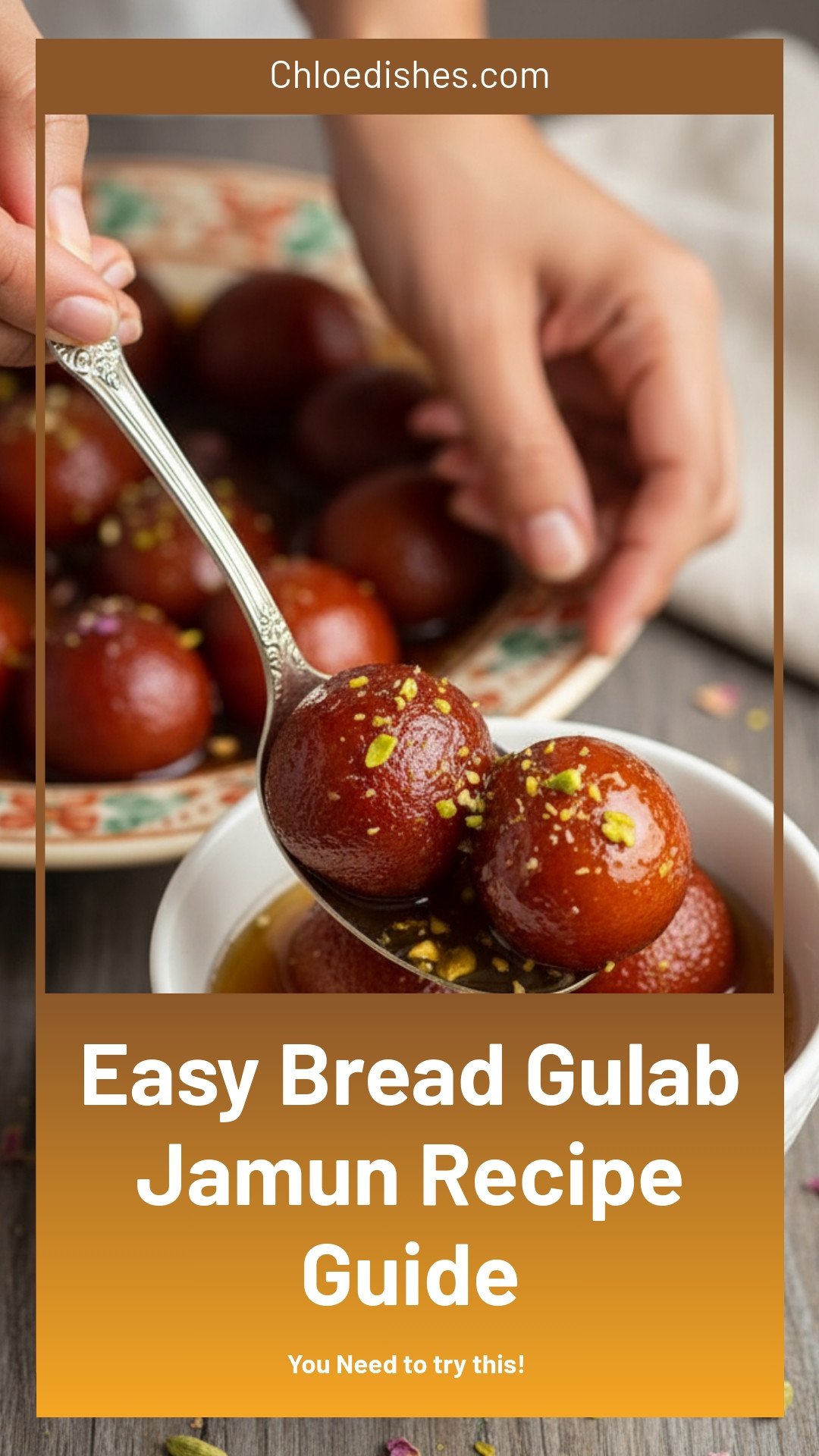
Easy Bread Gulab Jamun Recipe Guide
Description
Whip up soft, syrupy bread gulab jamun in minutes with this easy recipe guide. No kneading, just mix, fry, and soak.
Ingredients
Instructions
- Blitz the bread / rolls in a food processor until they form a fine crumb
- Transfer to a bowl and add the baking powder. Whisk it in. Then add milk, starting with 4 tbsp. Mix with a spoon
- Gently start to knead the dough with your hand, and add a little more milk as needed so the dough just comes together (I added about 5 ½ tbsp). Knead for just 1-2 minutes to remove any lumps. Do not over-knead
- Oil your hands and divide the dough into 12-14 balls. Shape each ball properly so it does not have any cracks on it
- Place a wok with 2″ of oil on medium-high heat to start heating the oil
- Alongside, add the water, sugar and cardamom pods for the syrup to a pot / pan. Ideally, the pan should be wide enough to fit the gulab jamun in 1 layer, but not so wide that the syrup does not have any depth and is spread too thin
- Put the pan with the syrup ingredients on the stove on medium heat. Bring to a boil, and simmer for 1-2 minutes until the sugar is dissolved. The syrup should not be thick. Turn off the heat and cover with a lid
- Once the oil is hot (~350F), fry a test gulab jamun ball to begin with. The oil should be hot enough that the gulab jamun becomes a brown color in 3-4 minutes without expanding too much, but not so hot that it immediately starts to color and burn
- Once the oil is at the right temperature, carefully add half of the gulab jamun balls. Use a large spatula to gently swirl the balls around as you fry them so they cook evenly on all sides. They should develop a brown color in 3-4 minutes. Remove from the oil and set aside while you fry the remaining gulab jamun
- Once the gulab jamun are fried, add them to the hot syrup in the syrup pan. Lift the pan and gently swirl it so the gulab jamun turn and soak the syrup on all sides. Cover with a lid and wait for 15-20 minutes, turning the gulab jamun halfway
- After 15-20 minutes, the gulab jamun should be soft and ready to eat. Be careful while handling them as they can break easily
- Serve and enjoy!

Leave a Reply