
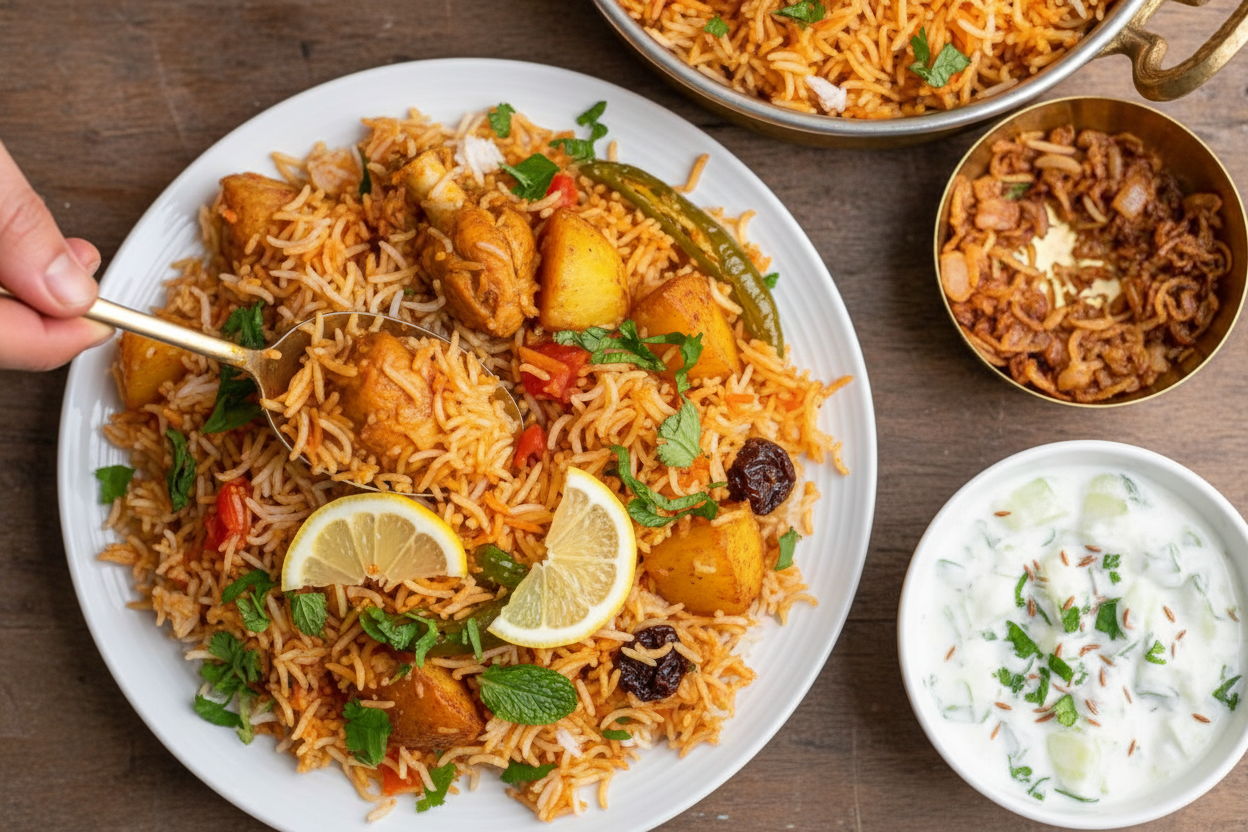
The Day My Biryani Taught Me Patience
I still laugh when I think about my first Karachi-style biryani. I tried to rush it, and the rice turned into sticky mush. My grandmother patted my hand and said, “Good food never hurries.” She was right. This recipe asks you to go slow. It asks you to layer things gently, like tucking in a child for bed. Each step has a job. The onions need to be golden, not black. The rice needs a firm bite, not a soft one. That patience pays off with every single bite. Have you ever ruined a dish by rushing? I bet you remember it just like I do. This biryani is special because it comes from Karachi, a busy city by the sea in Pakistan. People there cook with bold flavors. They use lots of tomatoes, lemons, and a dried plum called aloo bukhara. It tastes sour and sweet at the same time. That mix makes your mouth feel alive. This is not a quiet dish. It is loud, happy, and full of stories. And the best part? You get to tell your own story when you serve it.Why Your Kitchen Will Smell Like Heaven
Doesn’t that smell amazing? I can almost feel it from here. The moment you fry ginger and garlic paste, your whole house wakes up. Then comes the chicken, sizzling and turning a light brown. You add yogurt and two kinds of Shan masala. One is Bombay style, one is Sindhi style. They work together like old friends. My friend Fatima taught me that trick. She said, “One masala is good. Two is magic.” She was not wrong. Why does this matter? Because spice blends save time. They also keep family recipes safe. Think about it. Your grandma might have mixed her own spices. These boxes do that work for you. They give you the taste of tradition without needing a mortar and pestle. I love that. It means anyone, anywhere, can cook like they grew up in Karachi. What is your favorite shortcut in the kitchen? I would love to know.The Potato Rule I Learned the Hard Way
Here is something funny. The first time I made this, I boiled my potatoes until they fell apart. Then I put them in the biryani. They turned into mush. My son said it looked like potato soup with rice. He was not wrong. The trick is to stop cooking the potatoes when they are just cooked through. They should still hold their shape. You can check them with a fork. If the fork slides in easy, they are done. Take them off the heat right then. *Fun fact: Potatoes in biryani are not traditional for everyone. But in Karachi homes, they are almost a rule. People love how they soak up the spicy masala.* This matters because small details make big differences. A soft potato can ruin the whole pot. A firm one adds joy. The same goes for the rice. You want it parboiled, not fully cooked. It will finish cooking when you steam it later. Think of it like building a tower. Every block needs to be just right. Do you have a dish where one tiny mistake made you start over? Tell me, I promise I will not laugh much.Layering Like a Secret Love Letter
This is my favorite part. You take a clean, heavy pot. You put down a layer of rice, then some food color, then cilantro and mint. Then half the masala. Then rice again, then more masala. Then a final layer of rice, green herbs, and a few drops of yellow or orange color. Each layer is a secret. When you dig in later, every spoonful is a surprise. That is why you do not overmix. Let the layers stay a little separate. It is more fun that way. I once made this for a potluck. A lady took one bite and said, “This tastes like my mother’s kitchen.” She almost cried. That is why I cook. Not for praise, but for moments like that. Food can take you back in time. It can bring memories rushing in. When you serve this biryani, you are not just feeding people. You are giving them a hug from a place they might have forgotten. Have you ever tasted something and felt like you were a kid again? I bet you have a story about that.The Dum Secret and the Tea Towel Trick
Steaming, or “dum,” is the final magic trick. You wrap your lid in a clean tea towel. Then you put the lid on tight. You can even place a heavy mortar or a cast-iron pan on top. This traps all the steam inside. The steam slowly cooks the rice and masala together. It makes everything soft and fragrant. After twenty minutes, you lift the lid. Steam whooshes out, and the smell hits you like a warm hug. I still grin every time. Why does this matter? Because steam is gentle. It does not burn or dry out. It lets flavors melt into each other. Think of it like a slow dance. No one is rushing. Everyone is just moving together. That is how a good biryani feels. And when you serve it with cold raita, the contrast is perfect. Hot spiced rice and cool cucumber yogurt. Your tongue will not know what hit it. What do you like to eat with spicy food to cool down? I am always looking for new ideas.Ingredients:
| Ingredient | Amount | Notes |
|---|---|---|
| Oil | ½ cup | |
| Onion, thinly sliced | 2 small or 1 large (~250g) | |
| Ginger & garlic paste | 4 tbsp | |
| Chicken with bone | 2 lb | Cut into medium pieces |
| Plain yogurt | ¾ cup | |
| Salt | 2-3 teaspoon | To taste |
| Shan Bombay Biryani Masala | 1 pack | |
| Shan Sindhi Biryani Masala | ½ pack | |
| Russet potatoes | 3 (~550g) | Cut into ½” slices |
| Lemons, thinly sliced | 1-2 large (100-150g) | |
| Dried aloo bukhara (plum) | ¾ cup | |
| Tomatoes, thinly sliced | 6 (600g) | |
| Green chilies (serrano preferred) | 6-8 | Cut into long slices |
| Fresh cilantro, chopped | 1 cup | |
| Fresh mint, chopped | 1 cup | |
| Sella rice | 4 cups (800g) | |
| Water | 12 cups | |
| Salt (for rice) | 1-2 teaspoon | Or to taste |
| Yellow or orange food color | ¼ tsp | Mixed in 2 tbsp cold water |
| Plain yogurt (for raita) | 2-3 cups | Optional |
| Cucumber, finely chopped | 1 | For raita |
| Cumin seeds | 1-2 teaspoon | For raita |
| Salt (for raita) | Pinch | For raita |
My First Biryani Adventure
I still remember the first time I made biryani. I was 22, standing in my tiny kitchen, and I burned the onions. Burnt them black. My grandmother called me on the phone and laughed so hard she cried. “You learn by burning, sweetie,” she said. This Karachi-style biryani recipe is the one she finally taught me after I ruined three pots. It’s not hard, but it asks for a little patience. Doesn’t that smell amazing already? Let me walk you through it step by step, like we are cooking together in her kitchen.
Before we start, let’s get everything ready. I call this “the assembly line.” Slice your onions thin. Chop your herbs. Cut the potatoes into thick half-inch rounds. Set your spices in a little row. Trust me, nothing ruins a cozy cooking evening like running around looking for a lemon while your onions burn. Here is a little quiz for you: what is the most important ingredient in biryani? Is it the chicken, the rice, or the love? Share below!
Now, let’s build that masala. Heat the oil in a big pot and fry the onions until they are golden, not brown. That takes about 8 to 10 minutes on medium-high heat. Add the ginger and garlic paste and stir until you don’t smell that raw smell anymore. Then add the chicken and cook it on high for five minutes. Watch it get a light tan—that is the flavor locking in. Then stir in the yogurt, salt, both packets of Shan masala, and the potato slices. Fry for two to three minutes until the kitchen smells like heaven.
Add your lemon slices next. Then lower the heat, cover the pot, and let everything cook for 10 to 20 minutes. Check the potatoes every five minutes by poking them with a fork. Halfway through, toss in the dried plums (aloo bukhara) and the green chilies. (A hard-learned tip: do not skip the plums. They add a little tangy surprise that makes everyone ask, “What is that secret ingredient?”) Once the potatoes are just tender, layer the tomato slices on top, sprinkle some cilantro and mint, cover, and cook on low for ten minutes.
While the masala simmers, parboil your rice. Bring 12 cups of water to a boil with salt. Add the soaked Sella rice and cook for about 8 to 10 minutes. The grains should be cooked but still firm—no mushy rice allowed. Drain it in a colander and let it sit. Now comes the layering. In a clean pot, put a third of the rice on the bottom. Drizzle a little food color on top. Sprinkle some cilantro and mint. Then add half the masala. Repeat the layers. End with a final layer of rice, color, and herbs on top.
For the dum (steaming), poke four holes deep into the layers with the back of a spoon. Wrap your pot lid in a clean tea towel and put it on tight. Place the pot on a burner over medium heat for five minutes, then turn it to the lowest setting. Let it steam for about 20 minutes. You will know it is done when you see steam puffing out from under the towel. Turn off the heat and let it rest for five minutes. Then gently mix using a scooping motion—just five or six times. Overmixing breaks the rice, and we want those pretty layers.
Serve this fragrant biryani hot with a cold raita on the side. To make the raita, mix yogurt with chopped cucumber, a pinch of salt, and roasted cumin seeds. It cools down the spices so perfectly. Every time I make this for friends, someone asks for the recipe, and I smile. It feels like passing on a little piece of my grandmother’s kitchen to them. I hope you feel that warmth too.
Cook Time: 1 hour 15 minutes
Total Time: 2 hours
Yield: 6 to 8 servings
Category: Dinner, Main Course
Three Fun Twists to Try
Vegetarian Twist: Swap the chicken for 2 cups of hearty chickpeas or big cauliflower florets. Cook them the same way. The spices love vegetables just as much. You won’t miss the meat, I promise.
Spicy Mango Kick: Add half a cup of raw mango slices along with the plums. The sour and spicy mix will wake up your taste buds. My nephew calls it “fireworks biryani.”
Herby Summer Version: Toss in a handful of fresh dill and some chopped baby spinach between the layers. It adds a bright green color and a garden-fresh taste. Perfect for a picnic dinner. Which one would you try first? Comment below!
How to Serve and Sip
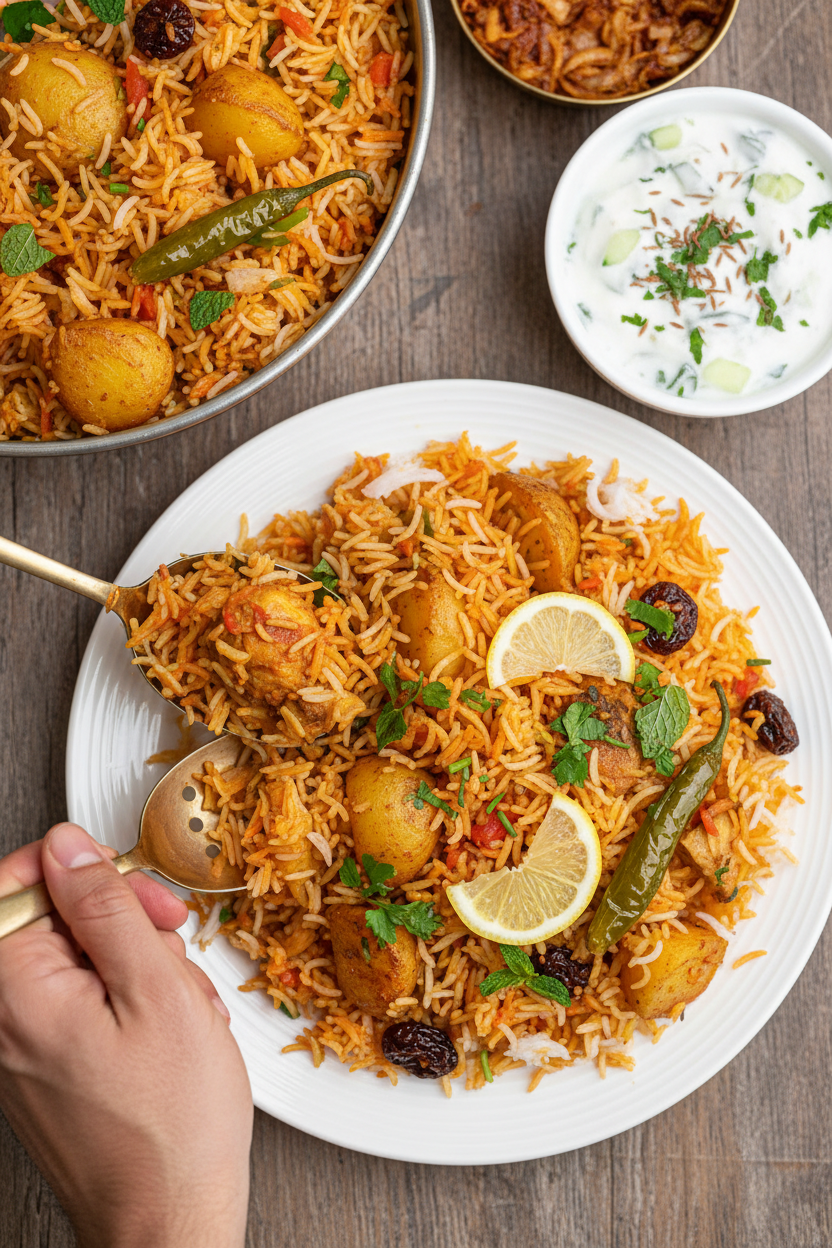
Serve the biryani on a big platter with the raita spooned right next to it. Sprinkle a pinch of fresh cilantro and a slice of lemon on top for a pretty look. Add some crunchy papadums on the side for texture. For a cozy meal, pair it with a tall glass of sweet, cold mango lassi. The creaminess balances all those warm spices. If you want something grown-up, a light, crisp lager beer works wonders. Which would you choose tonight?
Storing Your Karachi Chicken Biryani
This biryani tastes even better the next day. The flavors get cozy together in the fridge. Let the biryani cool completely before storing it. Put it in a tight-lidded container. It will stay fresh for up to four days.
For the freezer, portion the biryani into small bags. Squeeze out the air before sealing. It will keep well for up to one month. I once froze a big batch before a busy week. It saved dinner time and brought smiles to the table. Have you ever tried storing it this way? Share below!
To reheat, use a pan on the stove. Add a splash of water. Cover and warm on low heat for about ten minutes. This keeps the rice fluffy and the meat tender. Batch cooking matters because a homemade meal is ready when you are tired. You get the taste of your effort without the work. That feels like a warm hug from your past self.
Three Common Biryani Problems and Fixes
First problem: mushy rice. This happens when you boil the rice too long. Cook it only until it has a bite left. The rice will finish cooking during the steaming step. I remember the first time I made this. My rice turned into porridge. My grandma laughed and said, “You learn by tasting, not by guessing.”
Second problem: too much liquid in the masala. The potatoes and tomatoes release water. Cook the masala with the lid off for a few extra minutes. This thickens it and deepens the flavor. Fixing this matters because a watery biryani loses its layered magic.
Third problem: burnt bottom layer. Use a heavy pot and keep the heat low during dum. Wrapping the lid in a towel catches steam and stops burning. Which of these problems have you run into before? Fixing these small things builds your confidence. You learn to trust your eyes and nose over the timer. That is how you become a real cook.
Five Quick Q&A for This Biryani
Q: Can I make this gluten-free?
A: Yes. This recipe is naturally gluten-free. Double-check your biryani masala pack. Some spice mixes contain wheat flour.
Q: Can I prep this the night before?
A: Yes. Make the masala and parboil the rice. Layer them in the pot and keep it in the fridge. Steam it fresh the next day.
Q: What can I swap for potatoes?
A: Use sweet potatoes or cauliflower florets. They soak up the spices nicely.
Q: Can I halve the recipe?
A: Yes. Cut all ingredients in half. Use a smaller pot and reduce the steaming time to 15 minutes.
Q: Can I skip the food color?
A: Yes. The biryani will look more natural. The taste stays the same. Which tip will you try first?
A Little Goodbye From My Kitchen to Yours
Thank you for cooking along with me today. This biryani is a gift. It fills your home with the smell of saffron, spice, and love. I hope your table is full and your hearts are happy.
*Fun fact: In Karachi, biryani is often served on a big platter with everyone eating from the same dish.*
It makes the meal feel like a celebration.
Have you tried this recipe? Tag us on Pinterest! I love seeing your photos. They remind me that food brings us together no matter where we are. Keep cooking, keep sharing, and keep making memories.
Happy cooking!
—Chloe Hartwell.

Karachi Style Chicken Biryani Recipe
Description
Learn how to make authentic Karachi Style Chicken Biryani at home. A spicy, layered Pakistani rice dish bursting with flavor. Easy recipe, rich taste.
Ingredients
Biryani Masala:
Rice:
Layering:
Raita for serving (optional):
Instructions
- Prep: First, prepare all the ingredients. Wash and rinse the rice 5-6 times until the water becomes clearer, and soak it in cold water. Slice and chop all the vegetables, and gather everything else in front of you.
- Biryani Masala: Heat the oil in a large pot. Add the onion and cook it on medium high heat for 8-10 minutes until it becomes golden. Add the ginger & garlic paste and saute for 1-2 minutes until it no longer smells raw. Add the chicken, and cook on high heat for 5 minutes. This will give the chicken a light brown color and get rid of the raw smell. Add the yogurt, salt, Bombay Biryani Masala, Sindhi Biryani Masala, and potatoes. Stir and fry on high heat for 2-3 minutes to toast the spices and make them fragrant. Add the sliced lemon. Reduce the heat to low, cover, and cook until the potatoes are just cooked through (but not fully soft). This can take anywhere from 10-20 minutes depending on how big your potatoes are cut. Check after every 5 minutes. Halfway through cooking the potatoes, add the dried aloo bukhara and green chilies, and stir them in. Once the potatoes are just cooked through, remove the lid. Keep the heat on low, and layer the sliced tomatoes on top of the masala. Sprinkle 2 tablespoon each of the cilantro and mint on top (you won’t use all of the cilantro and mint in this step). Cover the pot with the lid and cook for about 10 min on low heat to soften tomatoes. Remove the lid and cook for 2-3 more minutes on medium heat. Then turn off the heat. At this point, the biryani masala should be very fragrant, the potatoes should be fully cooked through, and there should be a good amount of masala without being watery. If there’s too much liquid, cook down a bit more without a lid. Cover the masala and keep it hot.
- Parboiling rice: Follow the instructions given on the package of the rice to boil it in water with salt, but reduce the cooking time to ~75% and check frequently after the 50% mark. To cook Sella rice, I add the soaked rice to boiling water, and cook it for ~8-10 minutes before draining. The rice should be just cooked through (i.e., no raw middle) but should still have a firmness / bite to it. Drain the water by transferring the rice to a rice colander.
- Layering: To a clean, large heavy bottomed Dutch oven pot, add a third of the rice on the bottom. Drizzle over some food color (mixed in water) and sprinkle over a third of the remaining cilantro and mint. Then add a layer of half of the biryani masala. Repeat with another third of the rice, food color, cilantro, mint. Add the remaining biryani masala, and add a third and final layer of rice, food color, cilantro and mint on top.
- Steaming / Dum: Use the back of a large spoon / dowel to poke 3-4 holes through the layers of the biryani. Wrap the lid of the pot in a large tea towel and cover the pot. Place it on a small burner on medium heat, and put some weight on top of the lid (e.g., a mortar and pestle). After 5 minutes, reduce the heat to the lowest setting. Allow the biryani to steam for ~20 minutes. You will know it is done if you slightly lift the lid and see steam escaping. Turn off the heat and let the biryani rest for 5 minutes. Carefully and very gently mix the biryani. Use a large metal spoon or rice fluffer, and mix in a scooping motion just 5-6 times. The biryani does not have to be fully mixed; overmixing will risk breaking the rice. If you are serving the biryani in a different dish, you can skip the “mixing” and simply scoop the biryani into the dish, making sure to dig deep with each scoop. This will naturally mix the layers.
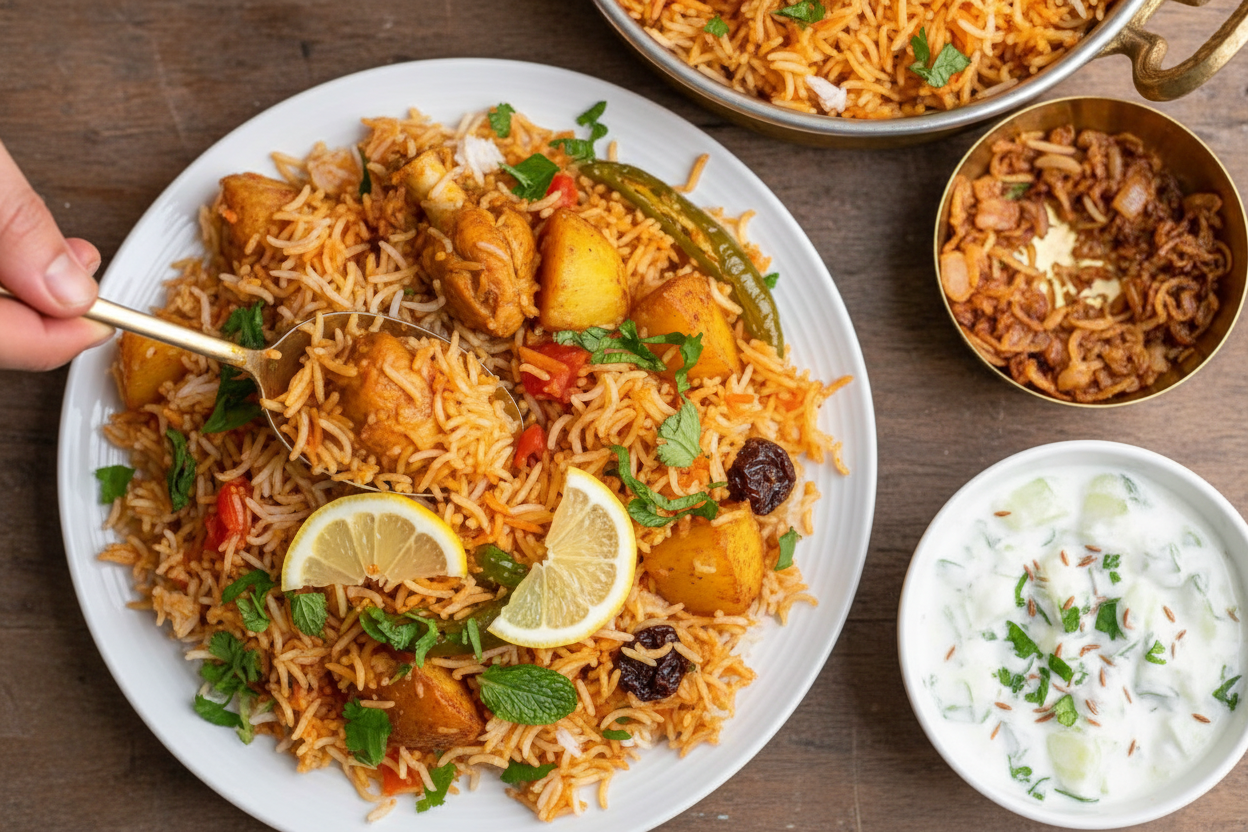
- Serving: Make the raita by mixing together the ingredients. Serve the biryani while hot with the cold raita, and enjoy!!
Notes
- For best results, use Sella rice and do not skip the dum (steaming) step.




Leave a Reply