
My First Batch of Kraut
I made my first sauerkraut over forty years ago. I was so nervous. I remember checking the crock every single day. I worried I had ruined it.
Then, one morning, I saw tiny bubbles. I was so excited! Those bubbles meant it was alive and working. It felt like magic in my kitchen. Do you get excited about kitchen science projects too?
Why We Squeeze the Cabbage
The recipe says to squeeze the cabbage for ten minutes. This step matters. You are not just making it soft. You are pulling out the cabbage’s own juice.
This natural juice becomes the brine. It protects the cabbage while it ferments. Your hands do the important work. It’s a wonderful, simple process. Fun fact: That salty cabbage juice is full of natural good bacteria. They are what make the kraut so good for your belly!
Keeping It Safe Under the Brine
This is the only tricky part. The cabbage must stay under the liquid. If it floats up into the air, it can spoil. I use a small plate with a jar of water on top.
It looks a little funny. I still laugh at that. But it works perfectly. The brine is like a safety blanket for the cabbage. Have you ever used a clever kitchen hack like this?
The Waiting Game
Now you wait. Leave it alone for a few weeks. It will sit quietly on your counter. You might see more bubbles or notice a tangy smell.
That smell is a good sign. It means everything is working. This waiting time teaches patience. Good food often cannot be rushed. What’s the hardest recipe you’ve ever had to wait for?
Making It Your Own
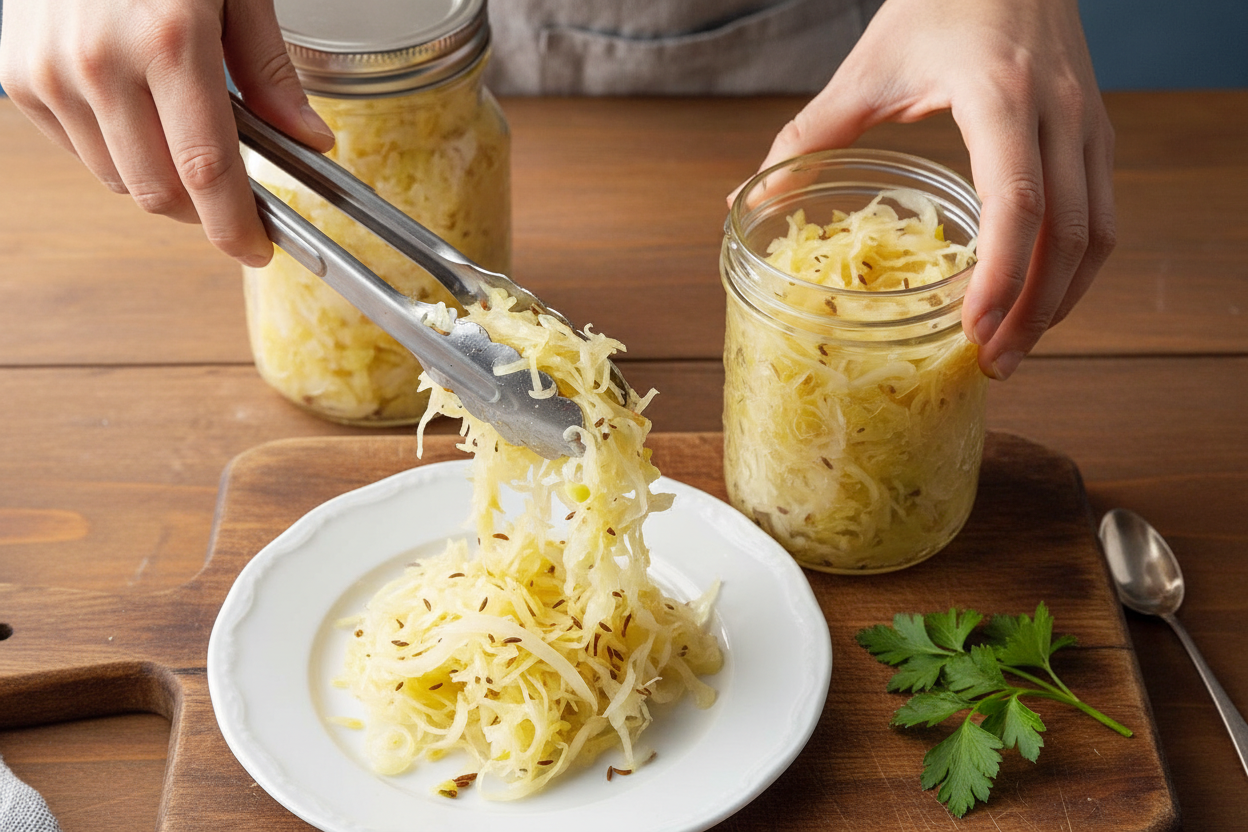
Plain sauerkraut is delicious. But you can add fun things. I love adding thin apple slices and a few caraway seeds. The apple gives a little sweet surprise.
The seeds add a nice, warm flavor. Doesn’t that smell amazing? This is how recipes become yours. You start with a simple idea and make it special. Trying new flavors is a joy.
Ingredients:
| Ingredient | Amount | Notes |
|---|---|---|
| Cabbage | 6 pounds (about 2 heads) | Main ingredient |
| Canning salt | 3 tablespoons | Do not use iodized table salt |
| Granny Smith apples | 2 | Optional. Peeled and thinly sliced. |
| Sweet onions | 2 | Optional. Thinly sliced. |
| Caraway seeds | 2 teaspoons | Optional. |
| Ground coriander | 1 teaspoon | Optional. |
My Cozy Kitchen Sauerkraut
Hello, dear! Let’s make some sauerkraut. It’s like magic cabbage. You just need salt, time, and your hands. My grandma taught me this. She said it keeps your tummy happy. I still make it every fall. Doesn’t that smell amazing when it starts to ferment? It’s a friendly little science project on your counter.
Step 1: Chop your cabbage nice and thin. Put it in a giant bowl with the salt. Now, roll up your sleeves and squeeze! Squeeze for a good ten minutes. You’ll feel it get soft and wet. That’s the good juice coming out. (My hard-learned tip: wear an apron! That cabbage juice can splash.)
Step 2: Pack your cabbage tightly into a big jar. Push it down hard to get rid of air bubbles. The cabbage must be covered by its own salty juice. If it’s not, you’ll need to make a little extra brine. Just mix boiled water with salt and let it cool. Pour it right over the top.
Step 3: We need to keep the cabbage under the juice. A small plate works well. Put something heavy on top, like a jar of water. Then, cover it loosely with a cloth. This lets the happy bubbles out. I still laugh at that. It’s the cabbage talking to us!
Step 4: Leave it in a cozy spot for about a month. Check on it sometimes. You might see a little scum on top. Just skim it off. It’s done when it stops bubbling and tastes tangy. Then, put it in the fridge. What’s the key to keeping your cabbage safe during its nap? Share below!
Cook Time: 30 minutes
Total Time: 3-4 weeks
Yield: About 2 quarts
Category: Ferment, Side Dish
Three Tasty Twists to Try
Once you know the basic way, you can play! Here are my favorite simple twists. They make each batch a little surprise.
The Apple Crunch: Add thin apple slices and a pinch of caraway. It’s sweet and earthy.
The Garden Patch: Mix in some shredded carrots and a bit of ginger. So bright and cheerful.
The Dill Pickle: Toss in lots of fresh dill and a few peppercorns. It tastes like a summer garden.
Which one would you try first? Comment below!
How to Serve Your Masterpiece
This kraut is more than a hot dog topping! I love it on a baked potato with a dollop of sour cream. It’s also perfect next to a simple pork chop. Or, just eat it straight from the jar with a fork. I’ve done that many times!
For a drink, a cold lager beer pairs wonderfully. For a cozy, non-alcoholic sip, try sparkling apple cider. The bubbles and tang are a perfect match. Which would you choose tonight?

Keeping Your Sauerkraut Happy and Tasty
Your sauerkraut will live happily in the fridge. It keeps for up to three months. I always use clean jars with tight lids. This keeps other flavors out.
You can make a big batch at once. It is perfect for busy weeks. Just pack it into smaller jars after fermenting. Then grab one whenever you need it.
My first batch filled my whole fridge shelf. I shared jars with all my neighbors. They loved the tangy, homemade gift. Storing food well means less waste and more sharing.
Have you ever tried storing it this way? Share below!
Simple Fixes for Common Fermenting Fumbles
Problem one: not enough brine. Your cabbage must stay underwater. If it’s dry, make the saltwater brine from the recipe. Pour the cool brine over the top.
Problem two: a funny smell. A little sour smell is normal. A really bad smell means something went wrong. I once used a dirty bowl and learned my lesson.
Problem three: no bubbles. Bubbles mean it’s working. If you see none, your room might be too cold. A warmer spot helps the good bugs get busy.
Fixing small problems builds your kitchen confidence. It also makes sure your food tastes great. Which of these problems have you run into before?
Your Quick Sauerkraut Questions Answered
Q: Is this gluten-free? A: Yes! Cabbage and salt are naturally gluten-free. Just check your spices.
Q: Can I make it ahead? A: Absolutely. Fermenting for weeks is the definition of make-ahead!
Q: What can I add? A: Try shredded carrots or a bit of beet. It makes pretty pink kraut.
Q: Can I make less? A: Sure. Just use one small head of cabbage and one tablespoon of salt.
Q: Any special tip? A: Use your hands to squeeze the cabbage. It’s the best tool you have. Fun fact: The squeezing helps release water to make its own brine! Which tip will you try first?
From My Kitchen to Yours
I hope you try making your own sauerkraut. It is a fun kitchen experiment. The wait is worth the tasty crunch.
I love seeing your creations. Please share your journey with me. Show me your crock or your finished jar.
Have you tried this recipe? Tag us on Pinterest! I would be so proud to see it. Thank you for cooking with me today.
Happy cooking! —Chloe Hartwell.


Sauerkraut: Sauerkraut Recipes Health Benefits and Tips
Description
Discover easy sauerkraut recipes and their amazing gut health benefits. Get simple tips for making perfect fermented cabbage at home.
Ingredients
Instructions
- Quarter cabbages and remove cores; slice 1/8 in. thick. In an extra-large bowl, combine salt and cabbage. With clean hands, squeeze cabbage until it wilts and releases liquid, about 10 minutes. If desired, add optional ingredients.
- Firmly pack cabbage mixture into 4-quart fermenting crock or large glass container, removing as many air bubbles as possible. If cabbage mixture is not covered by 1-2 inches liquid, make enough brine to cover by 1-2 inches. To make brine, combine 4-1/2 teaspoons canning salt per 1 quart of water in a saucepan; bring to a boil until salt is dissolved. Cool brine before adding to crock.
- Place crock weight over cabbage; the weight should be submerged in the brine. Or, place an inverted dinner plate or glass pie plate over cabbage. The plate should be slightly smaller than the container opening, but large enough to cover most of the shredded cabbage mixture. Weigh down the plate with 2 or 3 sealed quart jars filled with water. If using a glass container with a lid, cover the opening loosely so any gas produced by the fermenting cabbage can escape. Alternately, you can cover the opening with a clean, heavy towel. If using a crock, seal according to manufacturer’s instructions.
- Store crock, undisturbed, at 70°-75° for 3-4 weeks (bubbles will form and aroma will change). Cabbage must be kept submerged below surface of the fermenting liquid throughout fermentation. Check crock 2-3 times each week; skim and remove any scum that may form on top of liquid. Fermentation is complete when bubbling stops. Transfer to individual containers. Cover and store in the refrigerator for up to 3 months.
Notes
- Nutrition Facts (per 0.250 cup serving): 11 calories, 0g fat (0g saturated fat), 0mg cholesterol, 344mg sodium, 3g carbohydrate (1g sugars, 1g fiber), 1g protein.



Leave a Reply