
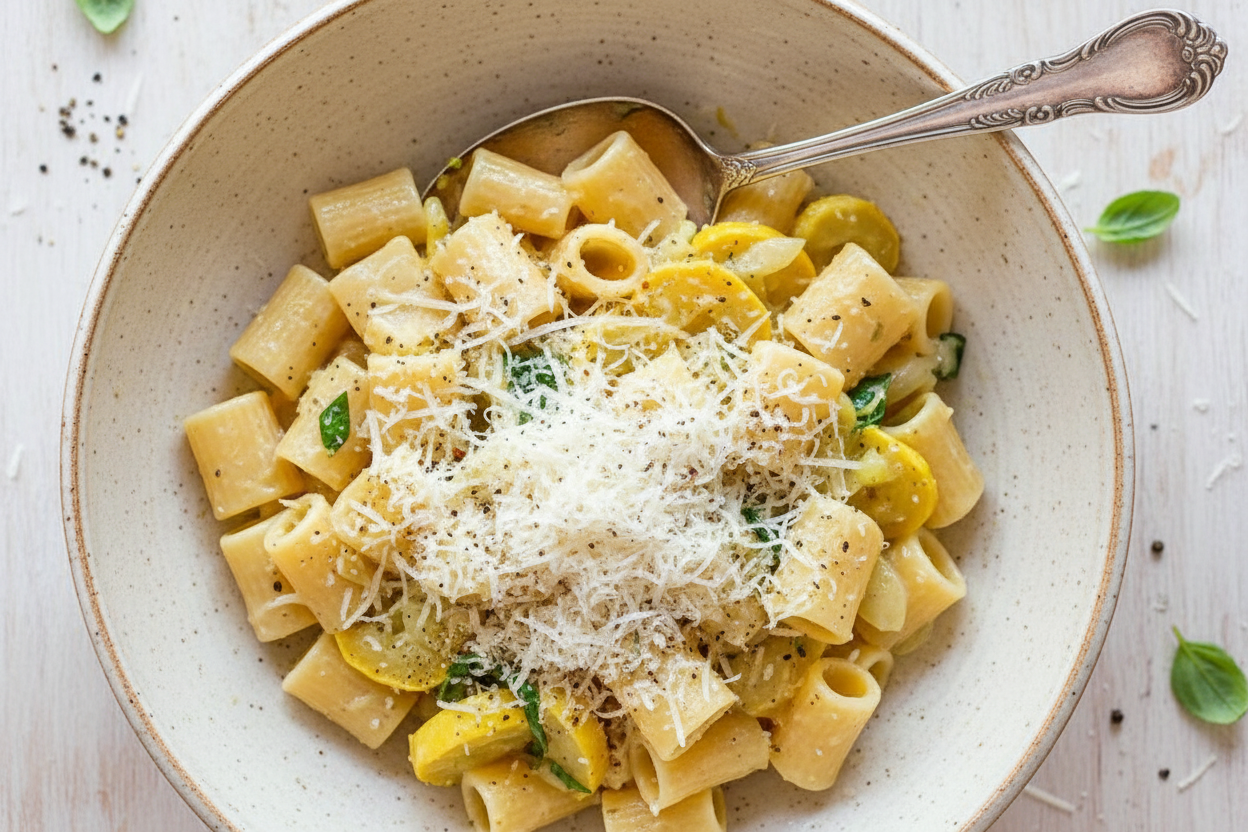
Why This Pasta Makes Me Smile
My grandma always said the best meals happen in one pot. Less scrubbing means more time for laughing. That is why I love this One-Pot Lemon Squash Pasta. It reminds me of a summer afternoon in her kitchen. She was trying to use up squash from her garden. She tossed everything into one big pot and said, “Trust the pot, love.” I still laugh at that memory. This recipe feels just like her — simple and full of sunshine. Have you ever made a whole meal in just one pot? What is your favorite one-pot dish to make when you want to keep things easy?The Simple Trick That Does All the Work
Here is the secret: you cook the pasta right in the pot with the squash. No separate pot of boiling water. No draining. You just put everything in and let it bubble together. The squash gets soft and creamy as it cooks. The pasta soaks up all the tasty broth. By the end, it all turns into a thick, cheesy hug in a bowl. Doesn’t that smell amazing? *Fun fact: You can swap the chicken stock for water, but the dish won’t be quite as rich. Stock adds a little extra love.*How the Flavors Get Along
Lemon makes everything taste brighter. It wakes up the squash and the cheese. The red pepper flakes add just a tiny kick, like a little tickle on your tongue. Basil is the last thing you stir in. It keeps its fresh green smell and makes the dish feel like a garden on a plate. I always tear the basil with my hands, not a knife. It feels more personal that way. This is why it matters: Gentle flavors can be just as exciting as bold ones. You do not need a dozen spices to make something delicious.The Cheese Part Is Important
You use two cheeses here — Parmesan and Pecorino Romano. Parmesan is nutty and mild. Pecorino is saltier and sharper. Together, they make the sauce silky and rich. Here is a little kitchen trick: grate your cheese from a block. The pre-shredded stuff has a powder on it that stops it from melting smooth. You want a creamy sauce, not a lumpy one. This is why it matters: Taking an extra minute to grate your own cheese changes the whole dish. Small choices make a big difference in cooking. When was the last time you tried grating your own cheese? Did it make the meal taste better?Waiting for the Right Moment
You cannot rush pasta. When you start, the pot looks like a lot of liquid with things floating in it. Do not worry. That is okay. Stir it every few minutes. Watch the water disappear. When only a little puddle is left at the bottom, taste a piece of pasta. It should be soft but not mushy. If it needs more time, just add a splash of water and keep going. Patience in the kitchen always pays off. I learned that the hard way when I burned mac and cheese as a kid. The smell stayed in the kitchen for days.Making It Your Own
This recipe is a great base for adding things you love. Toss in some cooked chicken if you want more protein. Add a handful of spinach at the end for extra green. You can even use a different pasta shape — whatever makes you happy. I once made this with tiny shell pasta, and the cheese sauce hid inside the shells. It felt like finding treasure in every bite. What would you add to this pasta to make it your own?A Little Taste Test at the End
The last step is the most important: taste it. You might need a pinch more salt. You might want another squeeze of lemon. Listen to your taste buds. They know what they like. I always eat the first bite standing at the counter. It is a little habit I stole from my grandma. She said the best food is the food you cannot wait to eat. So tell me — do you taste your food as you cook, or do you wait until it is on the plate?Ingredients:
| Ingredient | Amount | Notes |
|---|---|---|
| Yellow summer squash | 1 pound (2 medium) | Quartered lengthwise and thinly sliced |
| Small pasta (orecchiette, penne, or rigatoni) | 8 ounces | |
| Small yellow onion or fennel bulb | 1 | Thinly sliced |
| Garlic cloves | 4 | Thinly sliced |
| Kosher salt | 3/4 teaspoon | |
| Garlic powder | 1/4 teaspoon | |
| Dried oregano | 1/4 teaspoon | |
| Red pepper flakes | 1/8 teaspoon | |
| Chicken stock | 2 1/4 cups | |
| Lemon | Juice of 1 | |
| Grated Parmesan cheese | 3/4 cup | |
| Grated Pecorino Romano cheese | 1/2 cup | |
| Fresh basil | 1/2 cup | Thinly sliced |
| Freshly ground black pepper | 1/4 teaspoon |
The One-Pot Pasta That Changed My Mind
I used to think pasta needed a big pot of boiling water. Silly me. My friend Maria showed me this trick one rainy Tuesday, and I still laugh at that memory. We stood in her tiny kitchen, and she just threw everything into one pot. I nearly fainted. But then the smell hit me—lemon, garlic, and summer squash. Doesn’t that smell amazing? You only need one pot, and you get to lick the spoon when nobody’s watching.
This recipe is perfect for busy weeknights or lazy Sundays. The squash melts into the pasta and makes a creamy sauce without any heavy cream. I love watching it happen, like kitchen magic. The hardest part is waiting for it to boil. Trust me, the wait is worth it. When you stir in the cheese at the end, everything turns into gold.
Step 1: Grab a big pot or deep skillet. Add your sliced summer squash, pasta, onion, garlic, salt, garlic powder, oregano, and red pepper flakes. Pour in the chicken stock. Don’t stir yet—just let it all sit there for a second. (Hard-learned tip: Don’t skip the garlic powder. It’s the secret to making the squash taste like butter.)
Step 2: Turn the heat to high and bring it to a boil. Once it bubbles, reduce to medium-high. Set a timer for 10 minutes. Stir it every minute or two, or the pasta will stick to the bottom. I once forgot to stir and had to scrape the pot with a wooden spoon. It still tasted good, but my arms got a workout.
Step 3: Keep cooking until most of the water is gone. You want about a quarter cup of liquid left at the bottom. Take a bite of a pasta piece. Is it soft and tender? Perfect. If it’s still crunchy, add a splash more stock and cook another 2 minutes. What’s your favorite shape of pasta for this? Penne? Orecchiette? Share below!
Step 4: Turn the heat to low. Squeeze in your lemon juice. Sprinkle in the Parmesan and Pecorino Romano cheeses. Add the fresh basil and black pepper. Stir gently until the cheese melts into a thick, creamy sauce. If it looks dry, add a tiny splash of stock. This is the moment when you feel like a real chef.
Step 5: Taste it with a clean spoon. Does it need more salt? Cheeses can be salty, so go slow. Serve it warm in bowls. Sprinkle a little extra basil on top if you’re feeling fancy. I like to eat mine with a fork and a piece of crusty bread for scooping up the last bits.
Cook Time: 20 minutes
Total Time: 30 minutes
Yield: 4 servings
Category: Main Course, Pasta
Three Fun Ways to Change It Up
Sometimes I get bored eating the same thing twice. That’s when I start playing with ingredients. Here are three twists I’ve tried, and each one surprised me. Which one would you try first? Comment below!
Go Green With Spinach and Peas: Throw in a handful of fresh spinach and a half cup of frozen peas right at the end. The heat wilts the spinach and warms the peas. My little niece calls this “fairy pasta” because it looks like little green jewels.
Make It Spicy Sausage: Brown some crumbled Italian sausage in the pot before you start. Remove it, then cook the pasta in the same pot. Stir the sausage back in at the end. The grease adds so much flavor. My husband begs for this version every month.
Try a Spring Veggie Swap: Use asparagus and zucchini instead of squash. Chop the asparagus into bite-sized pieces. It cooks in the same time as the pasta. I made this last spring, and my kitchen smelled like a farmer’s market.
What to Serve With It
This pasta is hearty enough to be a meal on its own, but I love adding sides. A simple green salad with vinaigrette cuts through the creamy sauce. Or try roasted broccoli with a squeeze of lemon. I also love tearing up some crusty bread to dip in the leftover sauce. Nobody will judge you for it.
For drinks, I pour a cold glass of lemonade or sparkling water with a slice of lemon. If the grown-ups want something fancy, a crisp white wine like Pinot Grigio is perfect. The lemon in the pasta makes it sing. Which would you choose tonight?
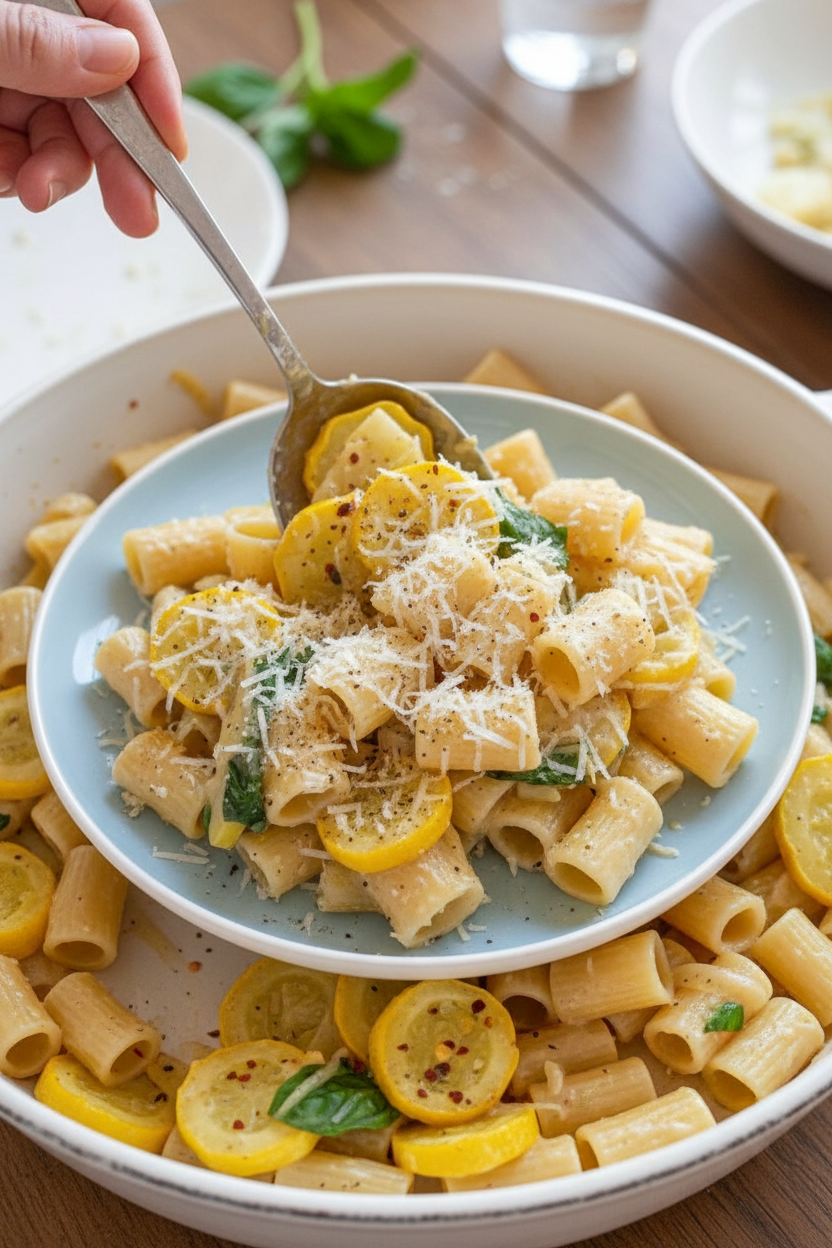
Storing Your Lemon Squash Pasta Like a Pro
Let’s talk about keeping this pasta tasty for later. I once made a big pot for a rainy Tuesday. I put the leftovers in a glass container with a tight lid. It sat in my fridge for three days and was even better the next day.
For the fridge, let the pasta cool first. Then scoop it into a container and seal it. It stays good for up to four days. For the freezer, portion it into small bags. Squeeze out the air before sealing. It keeps for about one month. To reheat, add a splash of water or stock. Warm it in a pot on low heat, stirring often. The sauce gets creamy again like magic. Why does this matter? Storing leftovers saves time on busy nights. You get a warm meal without starting from scratch. Have you ever tried storing it this way? Share below!
Three Common Problems and Easy Fixes
Sometimes things go wrong in the kitchen. I remember the first time I made this, the pasta was too dry. I added too much heat too fast. The fix is simple: cook on medium-high and stir often. If it dries out before the pasta is tender, add a quarter cup of water or stock.
Another problem is a sauce that’s too watery. You might have added too much stock at the start. That’s okay. Let it boil a little longer and stir. The water will evaporate and the sauce will thicken. Why does this matter? Fixing these mistakes teaches you to trust your eyes and taste. You become a better cook each time.
The last problem is bland flavor. You forgot to add salt or the cheese wasn’t salty enough. The fix is easy. Taste the pasta before serving. Add a pinch of salt or a squeeze of lemon. I once forgot the lemon juice and it tasted flat. A quick squeeze fixed everything. Which of these problems have you run into before?
Your Questions, Answered
Q: Can I use gluten-free pasta? A: Yes. Use your favorite gluten-free small pasta. Check it often because it cooks faster.
Q: Can I make this dish ahead of time? A: Absolutely. Cook the pasta, stop before adding cheese and basil. Reheat and stir in the cheese and basil before serving.
Q: What can I swap for summer squash? A: Zucchini works great. You can also use chopped broccoli or asparagus.
Q: How do I scale the recipe for two people? A: Cut all ingredients in half. Keep the cooking time the same.
Q: Can I add cooked chicken? A: Yes. Stir in a cup of shredded rotisserie chicken at the end. It makes the dish heartier. Which tip will you try first?
*Fun fact: You can eat the whole lemon if you slice it thin and cook it in the pot. It adds a sweet, sour burst.*
A Warm Goodbye from My Kitchen
Thank you for spending time with me today. I hope this pasta brings you joy and a full belly. Cooking is about sharing love, one pot at a time. I would love to see your creation. Have you tried this recipe? Tag us on Pinterest! Send a picture or a note. It makes my heart sing to know you are cooking along with me.
Happy cooking!
—Chloe Hartwell
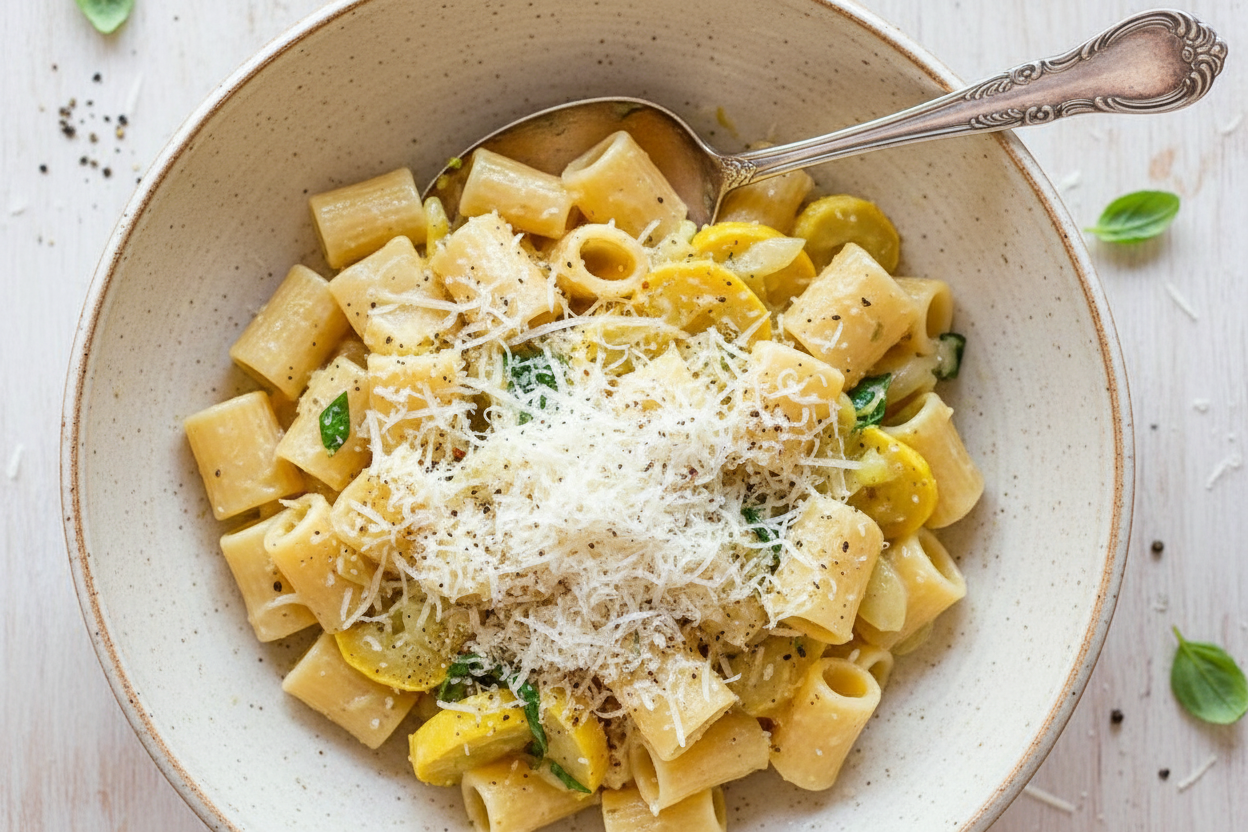
One Pot Lemon Squash Pasta Recipe
Description
This creamy One Pot Lemon Squash Pasta is the perfect easy weeknight dinner. Ready in 20 minutes with bold, fresh flavor.
Ingredients
Instructions
- Add 1 pound thinly sliced squash, 8 ounces small pasta, 1 thinly sliced onion, 4 thinly sliced garlic cloves, 3/4 teaspoon salt, 1/4 teaspoon garlic powder, 1/4 teaspoon dried oregano, 1/8 teaspoon red pepper flakes, and 2 1/4 cups stock to a large pot or deep skillet and bring to a boil over high heat. Reduce to medium-high and stir frequently until the water has mostly evaporated except for about 1/4 cup. Taste the pasta. If it’s tender, you’re ready to finish up. If it’s not quite tender, add another 1/4 cup of water or stock and keep cooking until tender.
- Reduce heat to low and stir in the juice of 1 lemon, 3/4 cup grated Parmesan cheese, 1/2 cup grated Pecorino Romano cheese, 1/2 cup thinly sliced fresh basil, 1/4 teaspoon freshly ground black pepper until you’ve created a thick creamy sauce. If it doesn’t look creamy, add a splash of stock or water to loosen it up and create a creamy sauce.
- Taste! You might need to add more salt depending on how salty your cheeses were.




Leave a Reply