
The Night I Forgot the Orange
One evening, my friend Caroline was coming for dinner. I wanted to impress her with something fancy. I decided to make this teriyaki salmon. But I was in a rush. I grabbed what I thought was orange juice from the fridge. Turns out, it was lemon juice. The sauce came out so sour! My face went red. Caroline just laughed and said it tasted like a happy accident. I still laugh at that. It taught me to always check the bottle. Doesn’t that smell amazing when the orange and ginger blend together? Have you ever swapped an ingredient by mistake and loved the result?Why This Oven Trick Works
This recipe uses one big metal pan for everything. That’s called a sheet pan. You put the cauliflower rice on one side and the green beans on the other. They all cook together in the hot oven. The reason this matters is simple. You only have one pan to wash afterward. No pile of dirty dishes. That means more time to relax and enjoy your meal. Why this matters for your weeknights: you get a hot dinner fast and clean up is easy. What is the one kitchen chore you hate the most? For me, it’s scrubbing pans.Making Your Own Sauce Is Magic
You could buy teriyaki sauce from a store. But homemade is different. It tastes brighter and happier. You blend soy sauce, orange juice, maple syrup, garlic, and ginger. That’s it. *Fun fact: The word “teriyaki” comes from two Japanese words. “Teri” means shine, and “yaki” means grill or broil. So the sauce is meant to make your food shiny!* When you make it yourself, you know exactly what is inside. No weird chemicals. Just real food. That matters because your body thanks you for eating real ingredients.A Little Story About Green Beans
My grandmother grew green beans in her backyard every summer. She would pick them, snap off the ends, and cook them with a tiny bit of butter. She said they tasted like sunshine. In this recipe, the green beans get tossed with sesame oil and seeds. Then they roast until a little crispy. The first time I made them this way, I thought of her. She would have loved the nutty smell of sesame seeds. Why this matters: a simple vegetable can become something special with just a little love. Do you have a vegetable you used to hate, but now you love? Mine is Brussels sprouts.The Salmon Skin Debate
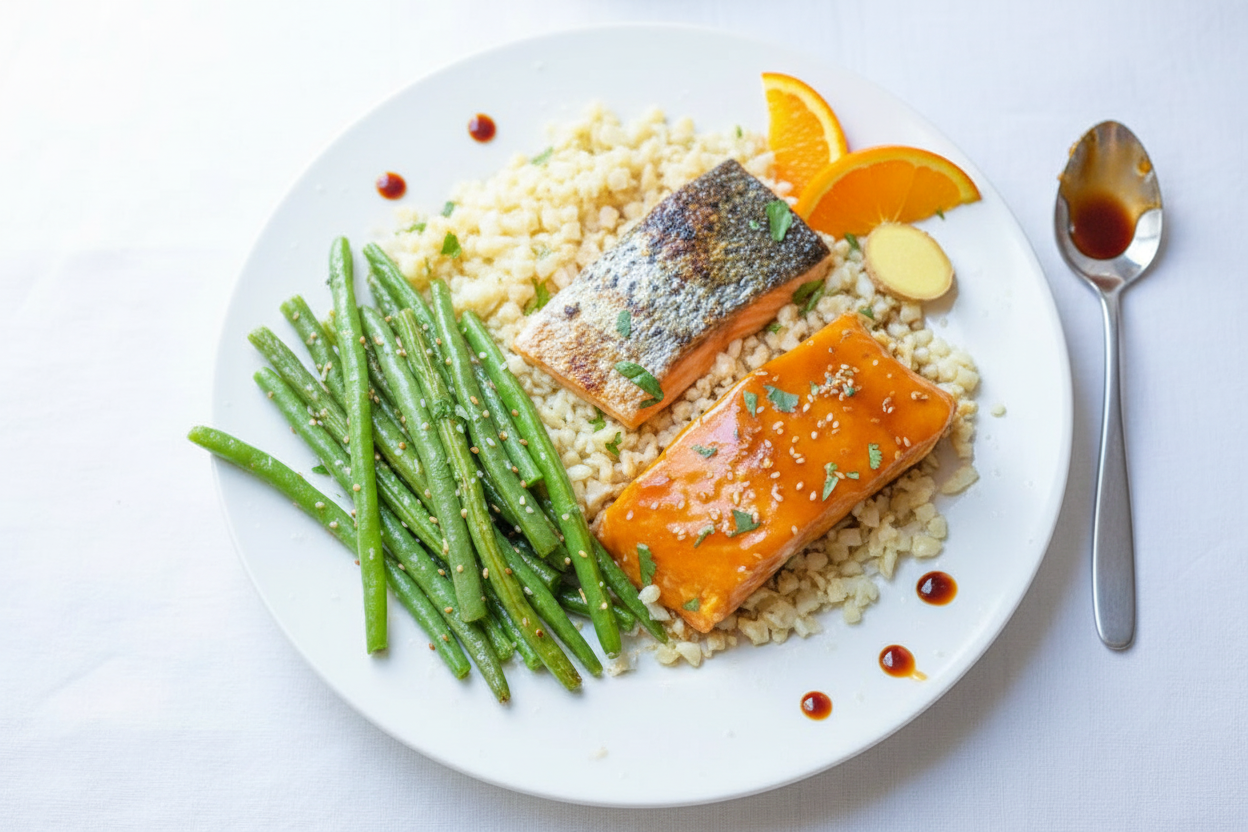
This recipe says to put the salmon skin-side up while it marinates. Then you broil it skin-side up on the pan. That might seem strange. Here is the secret. The skin gets super crispy under the hot broiler. Almost like a crunchy potato chip. Some folks in my family peel it off and leave it on the plate. I eat every single bite. The crispy skin is my favorite part. What about you? Do you eat the salmon skin or leave it behind? Tell me your answer.How to Thicken Without Panic
The last step is making the sauce thick. You mix cornstarch with water. Then you stir half of it into the boiling sauce. It gets thick very fast. Like magic in thirty seconds. One time I added all the cornstarch at once. The sauce turned into a blob. A thick, sticky blob. I had to start over. So remember: add half first, then more if you need it. This trick keeps your sauce smooth and perfect every time. Now I want to hear from you. What is one cooking mistake that taught you a good lesson?Ingredients:
| Ingredient | Amount | Notes |
|---|---|---|
| Soy sauce | 1/3 cup | |
| Neutral cooking oil | 1/4 cup plus 1 tablespoon | |
| Navel orange, juiced | 1 (about 1/3 cup orange juice) | |
| Maple syrup | 1/4 cup | |
| Large garlic clove | 1 | |
| Fresh ginger, peeled | 1/2-inch piece | |
| Skin-on salmon filets | 2 to 4 (4 to 6 ounce each) | |
| Cauliflower rice | 16 ounces (1 pound) | |
| Kosher salt | To taste | |
| Green beans | 16 ounces (1 pound) | |
| Sesame oil | 2 tablespoons | |
| Sesame seeds | 2 teaspoons | |
| Water | 3 tablespoons | |
| Cornstarch (or tapioca/arrowroot starch) | 2 tablespoons (or 4 tablespoons) | |
| Cilantro | For garnish |
The Night I Fell in Love with Salmon (and a Sheet Pan)
I still laugh at the memory of my first salmon dinner. It was rubbery, dry, and tasted a bit like the bottom of a shoe. My grandma patted my hand and said, “Honey, we’ll fix that.” And she did. This sheet pan recipe is her secret weapon. It’s one pan, one dream, and a whole lot of flavor. Doesn’t that smell amazing already?
The trick is all in the sauce. It’s sweet from maple syrup and tangy from a fresh orange. You blend it right up, no fancy tools needed. Then you pour it over the salmon to let it soak up the goodness while you prep everything else. Think of it as a little bath for the fish.
Now, here’s the part where I almost learned the hard way. You do not turn on the stove yet. Just let the salmon sit in that sauce, skin side up, like it’s napping. It gets happy and tender while you chop your green beans. Patience, my friend. It’s worth the wait.
Let’s Make Some Sheet Pan Magic
Alright, roll up your sleeves. We’re going to build a colorful, healthy dinner that tastes like a hug. Follow these steps, and don’t worry if it’s not perfect. My first try looked a little messy, but it tasted like victory.
Step 1: In a blender, mix the soy sauce, ¼ cup oil, orange juice, maple syrup, garlic, and ginger. Whir it until it’s smooth. No blender? Just grate the garlic and ginger with a tiny grater, then whisk everything in a bowl. It’s still delicious. (Hard-learned tip: don’t skip the orange. It brings a sunny sweetness the soy sauce needs.)
Step 2: Pour the sauce into a big skillet or pan. Place your salmon fillets in there, skin side facing up. Do not turn the heat on. Let them sit and soak for 10 minutes while you get the veggies ready. This is the salmon’s quiet moment.
Step 3: Preheat your oven to 450°F. Grab a half sheet pan. Spread the cauliflower rice on one side. Drizzle with 1 tablespoon oil, 2 tablespoons of the marinade, and a big pinch of salt. Toss it all together. Then, do the same with the green beans on the other side, using sesame oil and 1 teaspoon of sesame seeds.
Step 4: Pop the pan in the oven for exactly 10 minutes. The kitchen will start smelling wonderful. When the timer dings, pull it out carefully. Turn the oven to broil. Stir the veggies gently, keeping them on their own sides. Make two little empty spots for the salmon, then place the fillets in, skin side up.
Step 5: Slide the pan onto the top rack. Broil for 5 to 8 minutes. I like mine medium-rare (125°F), so I watch it like a hawk. While it’s cooking, boil the leftover marinade in a small pot. Mix water and cornstarch in a cup, then stir half of it into the boiling sauce. It will thicken in 30 seconds. What’s your favorite way to thicken a sauce? Share below!
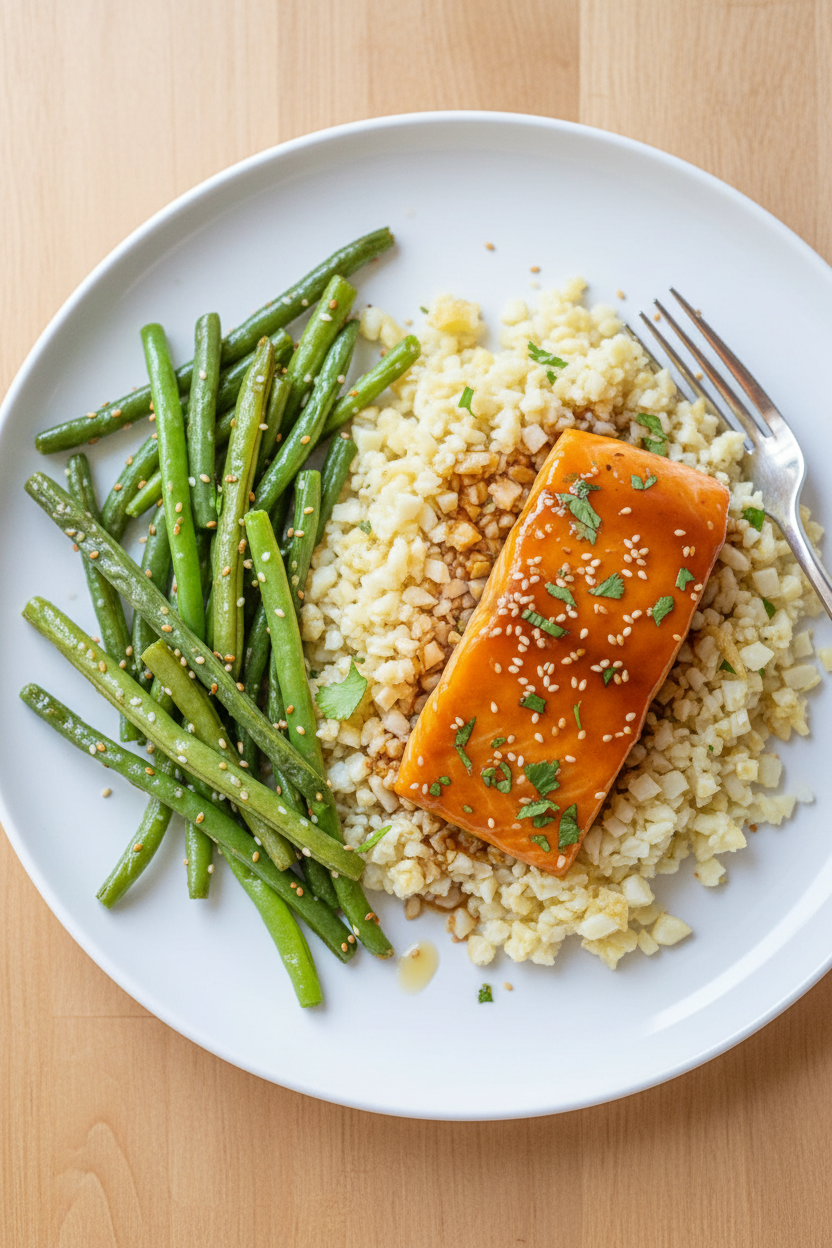
Step 6: Serve the salmon and green beans right on top of the cauliflower rice. Drizzle with lots of that glossy teriyaki sauce. Sprinkle with sesame seeds and fresh cilantro. Take a big bite and smile. You did it.
Cook Time: 20 minutes
Total Time: 35 minutes
Yield: 4 servings
Category: Dinner, Seafood
Three Fun Twists to Try
Sometimes you want to change things up. These twists are simple and full of surprise. Pick one that makes you curious.
Vegetarian Swap: Skip the salmon. Use thick slices of tofu or a big portobello mushroom cap. Marinate them the same way. They soak up the sauce like sponges.
Spicy Kick: Add a teaspoon of sriracha or red pepper flakes to the blender. The warmth sneaks up on you and makes everything pop. My nephew calls it “happy fire.”
Seasonal Veggie Mix: Swap the green beans for broccoli in winter or asparagus in spring. The cooking time stays the same, and each season brings a new crunch. Which one would you try first? Comment below!
How to Serve It Like a Pro
A little garnish goes a long way. Sprinkle extra sesame seeds on top, then add a few cilantro leaves. They make the plate look fancy without trying. I also love a squeeze of fresh lime over everything right before eating.
For sides, keep it simple. A bowl of steamed edamame or a crisp cucumber salad with rice vinegar works beautifully. The cool crunch balances the warm, sticky salmon.
Now, what to drink? For a grown-up option, a chilled sake or a dry riesling is a dream match. For the whole family, try sparkling water with a splash of orange juice and a sprig of mint. It’s bright and bubbly, just like this meal. Which would you choose tonight?
Storing Your Leftovers Like a Pro
This salmon dish stores well. Let it cool completely first. Put the salmon and veggies in a sealed container. Keep it in the fridge for up to three days.
I once packed this for my grandson’s lunch. He said the cold salmon reminded him of a fancy sushi bowl. We laughed about it all week! The flavors get even better overnight.
For the freezer, skip the fresh veggies. Only freeze the cooked salmon and extra sauce. It keeps well for a month. Thaw it in the fridge overnight.
To reheat, use a skillet over low heat. Add a splash of water. Warm it gently so the salmon stays tender. Never use the microwave—it turns the fish rubbery.
Why does this matter? Proper storage saves time and money. You can cook once and eat twice! This is called batch cooking. It makes busy weeknights easy. Have you ever tried storing it this way? Share below!
Common Problems and Easy Fixes
Problem one: the sauce burns in the pan. I remember when I left the stove for one minute. The sugar in the maple syrup scorched fast. The fix is simple: stir constantly once it boils. Turn the heat down right away.
Why does this matter? Burned sauce tastes bitter. You worked hard on this meal. A few seconds of stirring saves all that lovely flavor.
Problem two: the green beans come out soggy. This happens when the pan is too crowded. Spread them in a single layer. Give each bean room to breathe. They will roast crispy instead.
I once made this for a family dinner. The beans were limp, and everyone was polite but quiet. The next time, I used two pans. They came out perfect and crunchy.
Problem three: the salmon sticks to the pan. Always use a rimmed baking sheet. Line it with parchment paper or foil. This makes cleanup easy, too. The skin comes off clean every time.
Why does this matter? Sticking ruins the pretty presentation. You want each fillet to look like a restaurant plate. Fixing these small things builds your cooking confidence. Which of these problems have you run into before?
Your Questions, Answered
Q: Is this recipe gluten-free? A: Yes, if you use tamari instead of soy sauce. Regular soy sauce has wheat.
Q: Can I make the sauce ahead of time? A: Absolutely. Blend it and keep it in a jar for up to one week. It tastes even better after a day.
Q: What if I don’t have cauliflower rice? A: Swap it for regular rice or quinoa. Cook the rice before adding to the sheet pan.
Q: Can I double the recipe? A: Yes. Use two sheet pans. Place them on different racks and swap halfway through baking.
Q: Any tips for a crispy salmon skin? A: Pat the skin dry with a paper towel before marinating. Broil it skin-side up for a few extra minutes. Which tip will you try first?
A Warm Goodbye from My Kitchen to Yours
I hope you love this meal as much as my family does. Cooking should feel like a hug for your belly. Every time you make this, you get a little faster and a lot prouder.
Here is a fun fact to share with your friends: fresh ginger freezes beautifully. Grate it frozen right into the blender. No peeling needed!
Take a picture of your sheet pan dinner. Share it with someone you love. Tag my blog on Pinterest so I can cheer for you. Have you tried this recipe? Tag us on Pinterest! Happy cooking! —Chloe Hartwell.
Sheet Pan Teriyaki Salmon and Veggies
Description
Easy sheet pan teriyaki salmon and veggies for a healthy, flavorful dinner in under 30 minutes. quick weeknight meal, salmon recipe, teriyaki glaze, sheet pan dinner, healthy dinner idea
Ingredients
Instructions
- To make the teriyaki sauce: blend together ⅓ cup soy sauce, ¼ cup neutral cooking oil, the juice of 1 orange, ¼ cup maple syrup, 1 garlic clove, and ½ inch of peeled ginger until smooth. No blender? Mince or grate the garlic and ginger, then whisk everything together. Pour the mixture into a saucepan or skillet. Add the salmon, skin-side-up, to the marinade. Do not put the skillet over heat, we’re just marinating the salmon in there!
- Preheat oven to 450°F. Add the cauliflower rice to a rimmed half baking sheet and stir in 1 tablespoons neutral cooking oil, 2 tablespoons of the marinade, and a big pinch of salt. Toss to coat, then spread into an even layer over half of the baking sheet. Toss 16 ounces green beans, 2 tablespoons sesame oil, 1 teaspoon sesame seeds and ½ teaspoon kosher salt. Spread into as even a layer as possible over the second half of the baking sheet. Bake for 10 minutes.
- Remove sheet-pan from the oven. Raise the heat to broil. Stir the vegetables, keeping them separate, then lay evenly again. Create two spaces where the salmon can fit and place it on the sheet-pan skin-side up, not touching the other filets. Return sheet-pan to the top rung of the oven and broil for 5 to 8 more minutes, depending on doneness preference. I like my salmon medium-rare (125°F), so I roast it for 8 minutes. Medium: 135°F, well-done: 145°F.
- While the salmon is roasting, bring the marinade to a boil over medium-high heat. In a small bowl, stir together 3 tablespoons of water and 2 tablespoons of cornstarch. Stir HALF of the cornstarch slurry into the boiling sauce and cook until thickened to your liking – this happens very quickly, just 30 seconds or so! Add more of the cornstarch slurry if you need it. Stir in 1 teaspoon sesame seeds. Serve the salmon and green beans atop the cauliflower rice, drizzled with lots of teriyaki sauce. Garnish with sesame seeds and cilantro.



Leave a Reply