
Why I Started Making This Spicy Garden Tonic
I remember the first time I saw little bite marks on my tomato plants. A squirrel had taken a single nibble out of each one and left them to rot. I was so frustrated I almost cried. My neighbor, old Mrs. Garcia, laughed and handed me a handful of dried pepper flakes. She said, “Make them sneeze, dear. They will leave your veggies alone.”
That is how I learned that bugs and critters hate spicy things just as much as some people do. This spray is not for hurting anything. It just makes your plants taste terrible to the animals. You are basically making a salad dressing that only a brave little bug would dare to try.
Has a squirrel or deer ever eaten your garden veggies? Tell me about your funniest garden thief story.
The Magic of Simmering Peppers
You might think you can just throw chopped peppers in water and shake it up. That will not work very well. You have to let the heat out of the pepper cells. That is why we simmer them for ten to fifteen minutes first. It gets the capsaicin, which is the hot stuff, to jump into the water.
I always add garlic to mine. My kitchen smells like a spaghetti sauce that went rogue. But garlic makes the spray stickier and smell stronger to bugs. They hate garlic just like they hate vampires.
Why this matters: The longer you simmer, the meaner your spray gets. A fast boil is not as good as a gentle simmer. Be patient and let the pot bubble softly.
Let It Rest – The Secret Step Everyone Forgets
After you turn off the heat, you have to let the pot sit for a whole day. I know, that feels like forever. But this is the most important part. The water needs time to soak up all the heat from the peppers and garlic. If you use it right away, it is weak tea instead of hot sauce.
I still laugh at the time I rushed and sprayed my kale with fresh mixture. The rabbits just wiped their mouths and kept eating. They did not care at all. Letting it sit for 24 hours is what makes it a true pepper spray for plants.
Why this matters: This resting time saves you from having to spray every single day. A strong batch lasts longer on the leaves. That means less work for you.
What is the longest you have ever waited for a recipe to get better? I once waited a whole week for a pickle brine.
How to Make It Stick to Your Plants
Plain pepper water will just roll off a leaf like rain off a roof. That is why we add a few drops of natural dish soap or olive oil. This helps the liquid hug the leaf. Think of it like giving your spray a little pair of sticky hands. The animals cannot lick it off easily.
*Fun fact: Soap also breaks the surface tension of water. That just means the water spreads out flat instead of beading up. It coats the whole leaf surface like a blanket.
Do not use too much soap, though. Just a few drops. A whole squirt will make bubbles and hurt the plant. A little dab will do ya.
When and How to Spray for Best Results
You should spray in the early evening. The sun is going down, and the leaves are dry. If you spray in the morning, the dew will water down your spray. If you spray at noon, the sun can cook the pepper oil and burn the leaves. Evening is the perfect cozy time.
Spray the tops of the leaves and the bottoms, too. Bugs like to hide underneath where it is shady. Give them a spicy surprise everywhere. Also, remember to spray again after it rains. Rain washes everything away.
Do you have a special time of day you like to work in your garden? I love the quiet of just before sunset.
Keep Yourself Safe and Your Food Clean
This is not a joke. Wear rubber gloves when you strain and pour the spray. I once touched my eye after making this stuff. It burned for an hour. I looked like I had been crying all day. Safety goggles are a good idea, too. Your eyes will thank you.
And here is the big one: always wash your vegetables before you eat them. Just because the spray is natural does not mean you want to eat hot pepper wax on your lettuce. A good rinse under cold water fixes everything.
Doesn’t it feel good to know exactly what is on your food? You made it yourself, so you know it is just peppers and garlic.
Reapply and Share Your Stories
This spray will not last forever. You need to put it on your plants every three or four days. A regular schedule keeps the pests confused. They think your garden is always spicy. They will eventually go find easier food somewhere else.
I keep a little spray bottle in my garden basket and give my plants a quick mist whenever I walk by. It becomes a nice little routine. My tomatoes are safe, and my basil is beautiful. I hope yours will be, too.
I would love to know if you try this. Come back and tell me if your garden critters finally took a hint. What vegetable are you trying to protect the most?
Ingredients:
| Ingredient | Amount | Notes |
|---|---|---|
| Water | 1 gallon | Base liquid for the spray |
| Fresh or dried hot peppers (cayenne, jalapeno, serrano) | Equivalent to 10 cayenne peppers, chopped finely | If unavailable, use 3–5 tbsp hot pepper flakes or 2 tbsp hot pepper powder |
| Garlic (optional) | 6 cloves | Enhances repellent properties |
| Natural dish soap or olive oil | A few drops | Helps liquid stick to plants |
Why I Started Making Hot Pepper Spray
My grandma always said, “The best garden secret is a little bit of spice.” I still laugh at that memory. She used to chase away hungry rabbits with just cayenne and water. Now I do the same, but I added a few tricks of my own. This spray keeps bugs and critters away, not you. Doesn’t that smell amazing when it’s simmering? Let me walk you through it.
How to Make Your Own Hot Pepper Spray
Here is the simple way I learned from years of trial and error. Protect your tomatoes, peppers, and lettuce with this homemade spray. Just follow each step, and your plants will thank you. (Hard-learned tip: always wear rubber gloves when handling hot peppers. My eyes still water just thinking about that one time I forgot!)
Step 1: Chop up about 10 cayenne peppers very finely. If you only have dried flakes, use 3 to 5 tablespoons. Add 6 garlic cloves if you want extra power. Simmer these in just enough water to cover them for 10 to 15 minutes. This wakes up all that spicy heat.
Step 2: Pour in one gallon of water and stir everything together. Let it all simmer on low for 30 to 45 minutes. The kitchen will smell so warm and spicy. Your whole house will smell like a pepper farm.
Step 3: Take the pot off the heat and cover it with a lid. Let it sit on the counter for a full 24 hours. This is the secret to a really strong spray. Patience makes it super potent. Do not peek too much or the steam will get you.
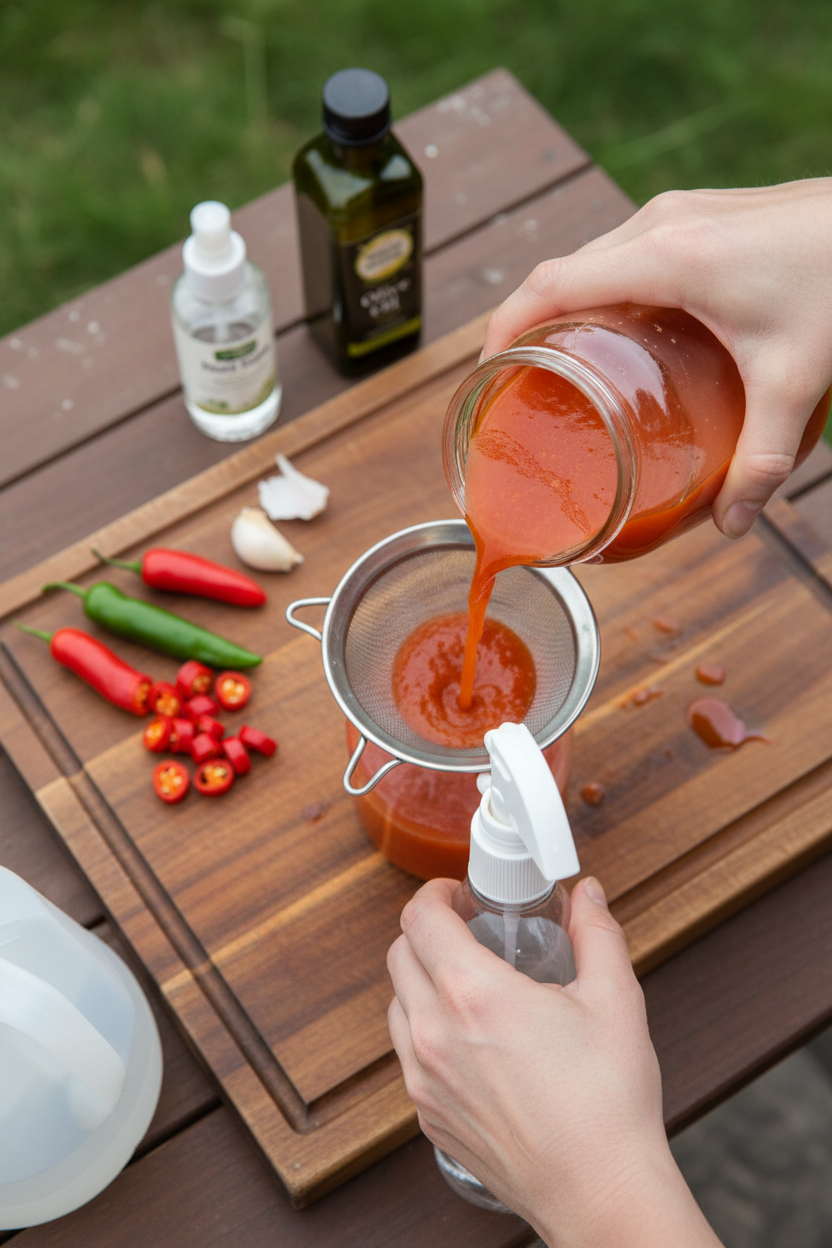
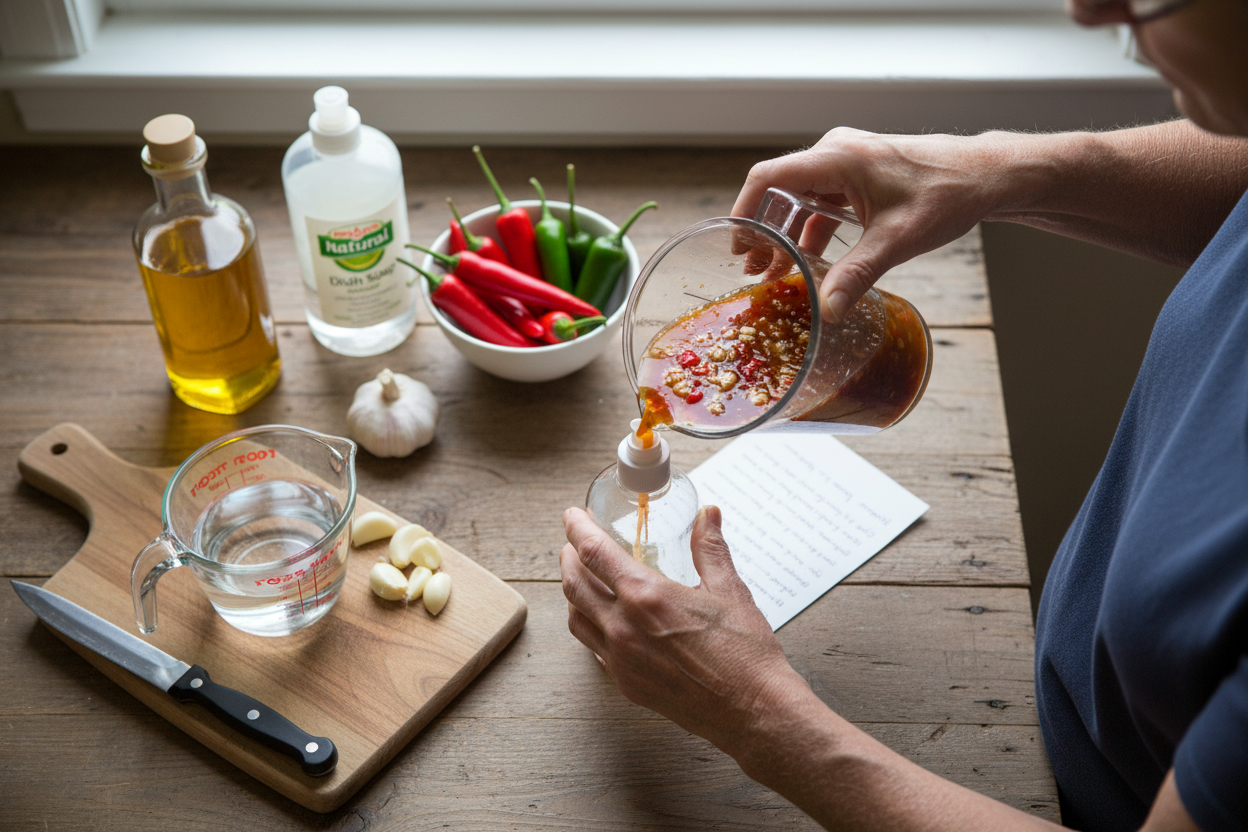
Step 4: Strain the liquid through a colander or an old cloth into a clean spray bottle. Squeeze out every last drop of that spicy juice. Add a few drops of natural dish soap or olive oil. This helps the spray stick to leaves instead of dripping off.
Step 5: Put on your rubber gloves and safety glasses now. Fill your spray bottle and spritz the tops and bottoms of leaves, veggies, and fruit. Be careful not to breathe in the mist. I once sneezed for ten minutes straight after being careless.
Step 6: Spray in the early evening when leaves are dry. Avoid morning dew or hot midday sun. This way the liquid stays on the plant longer. Your plants will get the full protection all night long.
Step 7: Reapply every three to four days, especially after rain or watering. The spray washes off easily, so consistency is key. Your garden will stay safe all season long. Now, here is a quick question for you: What is the spiciest pepper you have ever grown? Share below!
Cook Time: 1 hour 15 minutes (including simmering)
Total Time: 25 hours 15 minutes (includes 24-hour steeping)
Yield: About 1 gallon of spray
Category: Garden Pest Control
Three Fun Twists to Try
Sometimes I like to mix things up and try new flavors. Here are three fun ways to change your spray. Each one adds a little extra protection.
Citrus Boost Twist: Add the peels of two lemons or oranges while simmering. Bugs hate the smell of citrus. Your garden will smell like a sunny kitchen.
Herb Garden Twist: Throw in a handful of fresh mint or rosemary leaves. These herbs confuse pests with their strong scent. Plus, your spray will smell like a tea shop.
Extra Hot Twist: Add one chopped habanero or ghost pepper to the mix. This is for serious pest problems only. Wear double gloves and keep kids away from the pot. Which one would you try first? Comment below!
How to Serve Up Your Garden Goodies
After you spray your plants, wait a few days before picking anything. Then wash every single piece of produce really well with cold water. I like to serve my spicy-protected tomatoes on a simple sandwich with fresh basil. Cucumbers taste great sliced with a little salt and lime juice. For a fun dinner, make a garden salad with everything you saved from the critters.
For drinks, pair your garden meal with a tall glass of iced mint tea. If you are older, try a light, crisp white wine like Sauvignon Blanc. Both are cool and refreshing after a day in the garden. Which would you choose tonight?
How to Keep Your Garden Safe and Happy
I remember the first time I made hot pepper spray. My little garden was being eaten by deer and rabbits. They loved my tomatoes more than I did. I was worried the spray would hurt my plants. But it only scared the critters away. This spray is just like a spicy tea for your garden. It uses the heat from peppers to tell pests to leave. You can store leftover spray in the fridge for up to two months. Just keep it in a labeled jar or bottle. If you make a big batch, you save time later. Pour it into small spray bottles for quick use. Always shake well before spraying. I like to make extra on a quiet Sunday afternoon. Then I am ready for a whole week of garden care. Have you ever tried storing it this way? Share below!
Why does this matter? Because a safe garden means more food for your table. And storing your spray properly keeps it strong and ready to work.
Three Common Problems and Easy Fixes
One problem is the spray not sticking to leaves. This happens when you forget the soap or oil. Just a few drops help the liquid cling. I once used too much soap and made suds all over my squash. That was a sticky mess. A second problem is not letting the mixture cool long enough. I remember being impatient one time. The spray was weak and the pests came right back. That is why we must wait a full day. A third problem is spraying in the hot sun. It can burn the leaves and make them sad. Always spray in the cool evening when plants are dry. Which of these problems have you run into before?
Why does this matter? Fixing these problems helps you feel proud of your garden work. It also keeps your plants healthy and your harvest tasty.
Fun fact: Hot pepper spray is safe for dogs and cats once it dries, but keep pets away while spraying.
Your Questions Answered
Q: Can I use this spray on my vegetable plants if I am gluten-free?
A: Yes. Hot peppers, garlic, and water have no gluten at all. It is a safe choice for any garden.
Q: Can I make this spray ahead of time and store it?
A: Yes. You can keep it in the fridge for up to three months. Just shake before using.
Q: What if I do not have fresh peppers or flakes?
A: Use 2 tablespoons of hot pepper powder instead. It works just as well.
Q: Can I double the recipe for a large garden?
A: Yes. Just double all the ingredients. Use a bigger pot for simmering.
Q: Do I need to wear gloves when I use the spray on plants?
A: Yes. The spray is spicy and can sting your skin. Gloves keep your hands safe. Which tip will you try first?
A Warm Goodbye from My Kitchen to Yours
I hope this little spray brings you peace in the garden. It is simple, safe, and full of old-fashioned know-how. I love seeing what you grow and cook in your home. If you try this recipe, please share a photo. Tag us on Pinterest so we can see your beautiful plants. Have you tried this recipe? Tag us on Pinterest! Remember, we learn best when we share with each other. Happy cooking!
—Chloe Hartwell.
Using Hot Pepper Spray to Protect Garden Plants
Description
Protect your garden naturally using hot pepper spray to repel pests. Easy DIY recipe for healthy plants.
Ingredients
Instructions
- Simmer your hot pepper and garlic (if using) for about 10 to 15 minutes—this will draw out the heat so your spray is more effective.
- Add in the water, stir and let simmer for 30 to 45 minutes. This will infuse the water with the spiciness of the peppers.
- Remove from heat. Leave the pot covered and let cool for at least 24 hours to increase potency. Strain through a colander or cloth into a spray bottle.
- To help the liquid stick to the plants, add a few drops of natural dish soap or olive oil. The spray will be most effective if used within 2 to 3 months.
- To use hot pepper spray for plants, fill a spray bottle with your solution and spritz leaves, veggies and fruit.
- If possible, try to spray in the early evening when foliage is drier. Avoid spraying early in the morning, when plants are damp with dew, or during the hottest part of the day.
- Reapply consistently, about every 3 to 4 days. And reapply whenever it rains or you water your plants.
- Use rubber gloves and eye protection when mixing it together and spraying.
- Make sure to thoroughly rinse all produce that’s been sprayed before eating.
Notes
- Nutrition information is not provided for this non-edible garden spray.




Leave a Reply